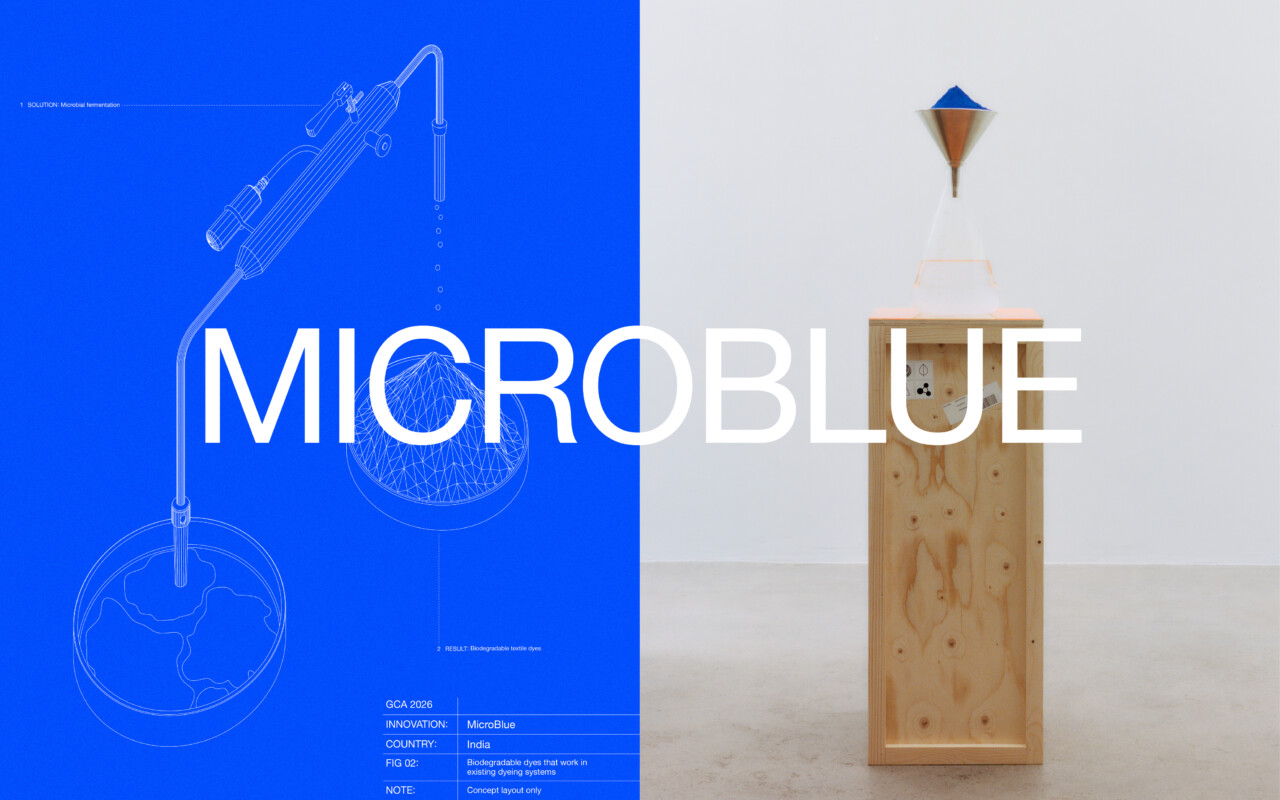
Innovation
MicroBlue
ChangemakerS
Dr. Anjana Badrinarayanan
Suchitha Raghunathan
Sakshi Gore
Country
India
Brewing dyes for existing factory systems
Brewing dyes
for existing
factory systems
INNOVATION
MicroBlue
WEBSITE
https://www.microbeworksscientific.com/
CHANGEMAKERS
Dr. Anjana Badrinarayanan, Suchitha Raghunathan, Sakshi Gore
COUNTRY
India
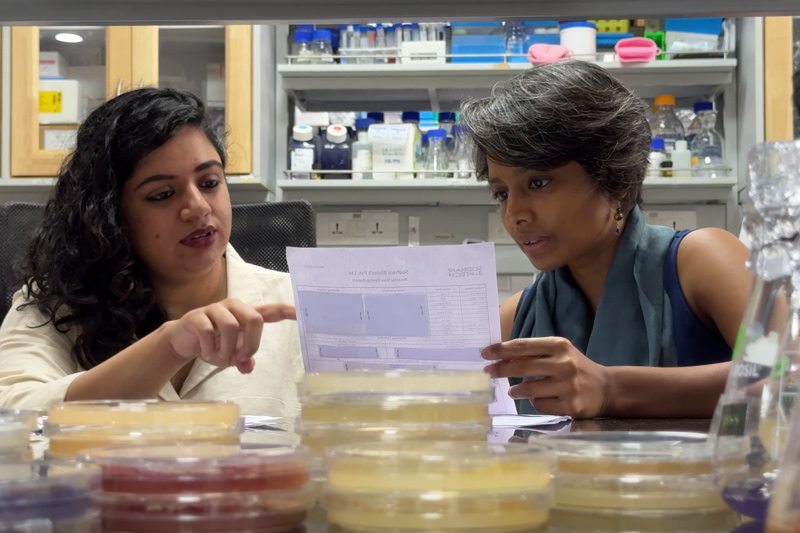
Colour is one of the most powerful tools in fashion. It defines identity, culture, and expression, yet the way it is created has remained largely unchanged. For Suchitha Raghunathan and Dr. Anjana Badrinarayanan, this disconnect is hard to ignore. As scientists working in a textile hub, they see the impact of dyeing every day, from polluted water to the conditions faced by workers. MicroBlue is their answer. By using microbes to produce dyes through fermentation – similar to brewing – it replaces toxic, petroleum-based colourants with a biodegradable alternative that can be used in existing dyeing systems.
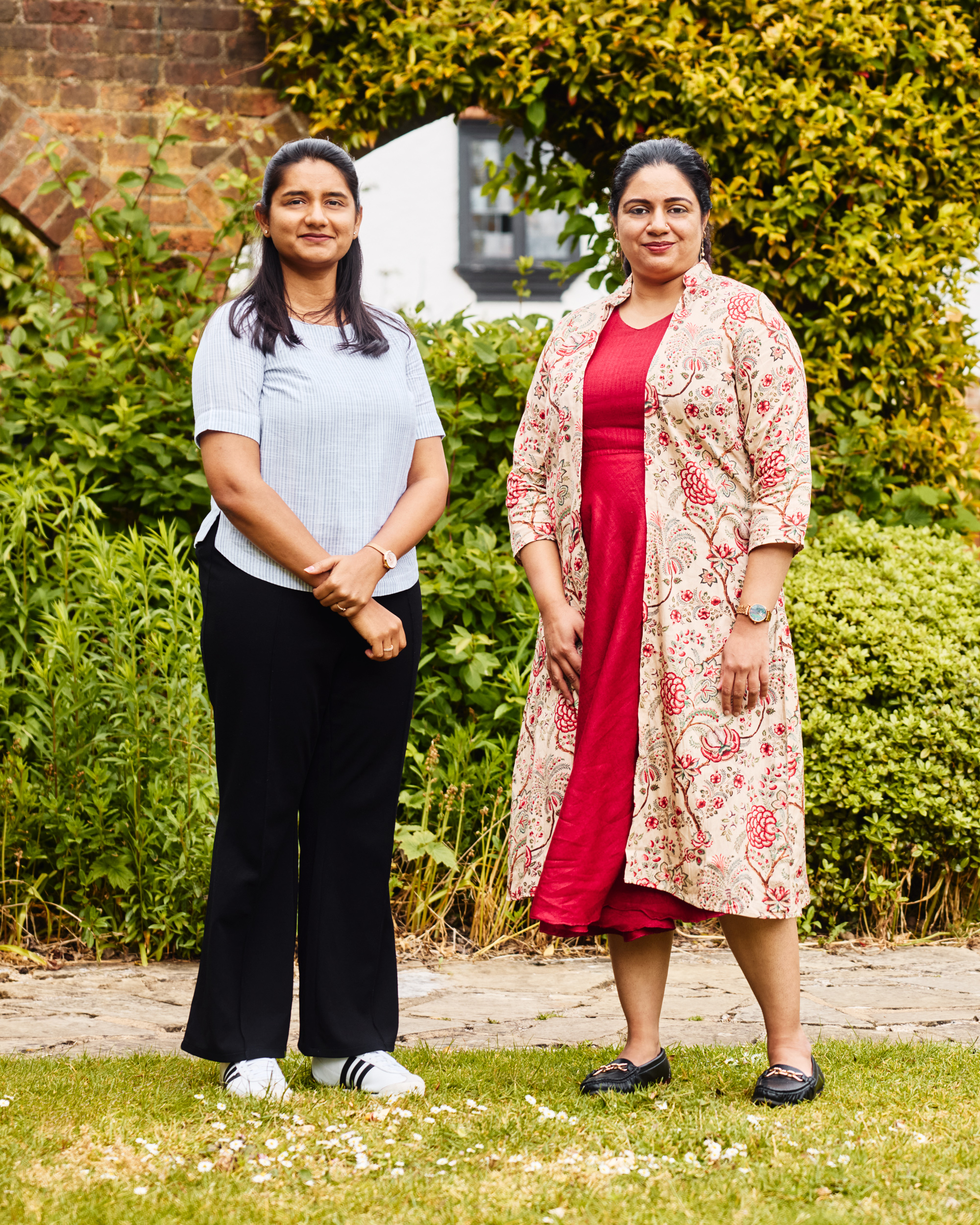
Suchitha Raghunathan
Dyeing remains one of the most resource-intensive stages in the textile value chain, with large volumes of synthetic dyes still entering water systems each year.
While safer alternatives exist, they have struggled to scale or match performance. The challenge is not only to replace conventional dyes, but to do so in a way that works on the factory floor.
For the team behind MicroBlue, the answer began with experimentation.
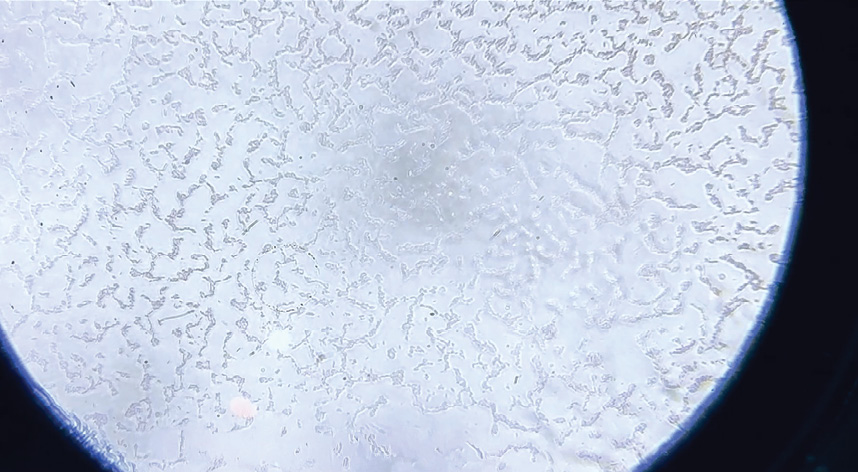
They initially explored whether microbes could be grown directly on fabric to create patterns. That idea didn’t work as expected, but it led to something else. “We realised we could extract the colour and apply it to textiles,” Suchitha explains. That shift changed the direction entirely. What started as a question about patterning became a new way of producing dyes. As they learned more about the impact of conventional dyeing, the work took on a new urgency. “We couldn’t be at peace without trying to address it,” they say.
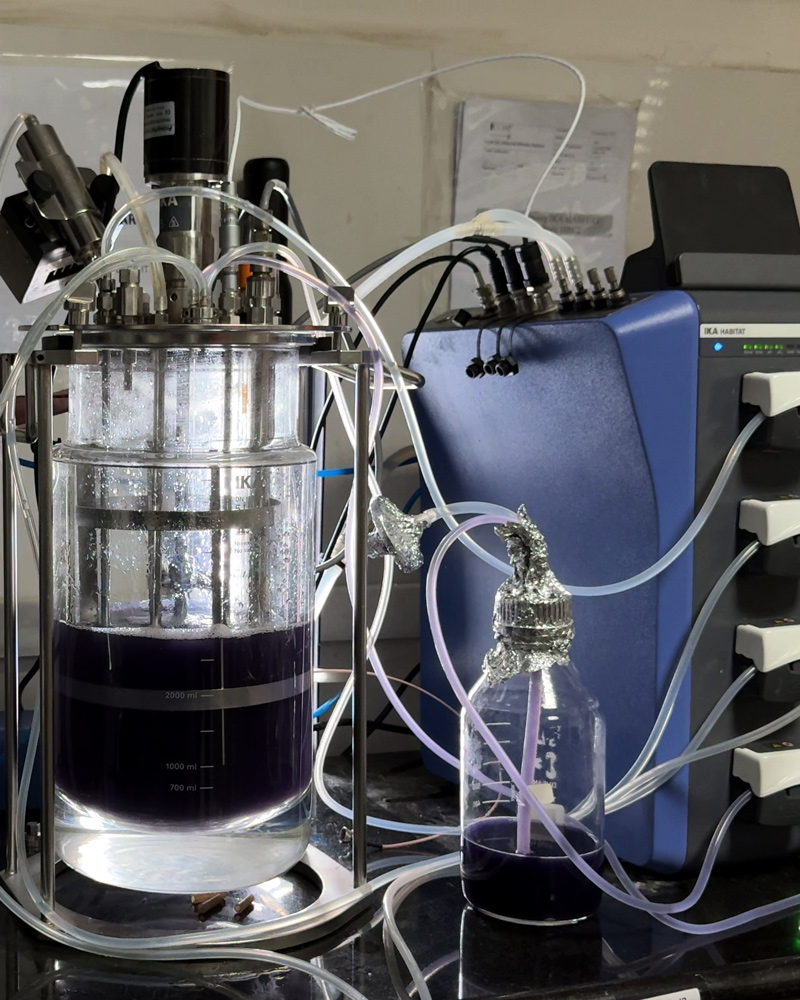
MicroBlue produces dyes using microorganisms grown through fermentation, a process similar to brewing.
The colour is then extracted and processed into a powder that can be stored, transported, and used in dyeing machines.
Unlike conventional dyes, MicroBlue leaves behind no toxic residues. The dyes are biodegradable, non-toxic in aquatic environments, and produced using less energy and fewer harmful chemicals.
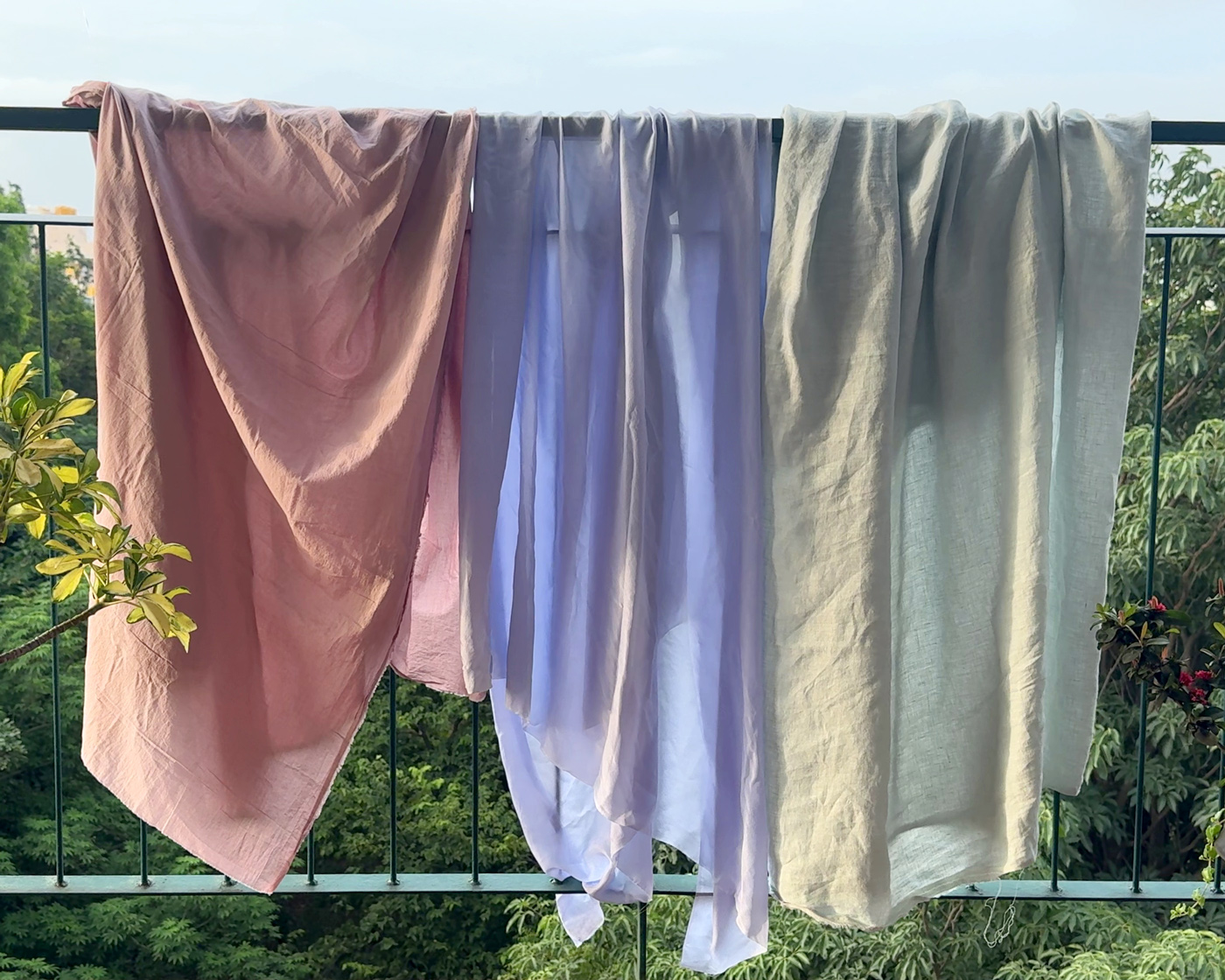
What sets MicroBlue apart is not only how the dye is made, but how it performs and how easily it can be adopted. It offers flexibility in colour, allowing manufacturers to achieve a wide range of shades by adjusting the dyeing process, rather than being limited to a single output.
At the same time, it fits into existing systems. Many alternatives remain confined to niche applications because they require new infrastructure or come with trade-offs in cost or performance. MicroBlue can be used much like conventional dyes, using established recipes and processes.
For Suchitha and Anjana, this is essential. Cleaner technologies should not be limited to a premium segment, but available to the wider industry.
“We want to make sure cleaner choices are not a luxury,” they say.
The work with MicroBlue is both scientific and personal.
“As scientists, it’s deeply satisfying to see our work translate into something tangible,” they say. “A product that people can use.”
But their perspective is also shaped by where they are.
“As women in the global south, we feel this mission differently. Textile dyeing affects our water, our workers, and our communities. We are humbled by the opportunity to use our passion and expertise to create solutions for a problem that is so close to home.”
More information
-
This is GCA
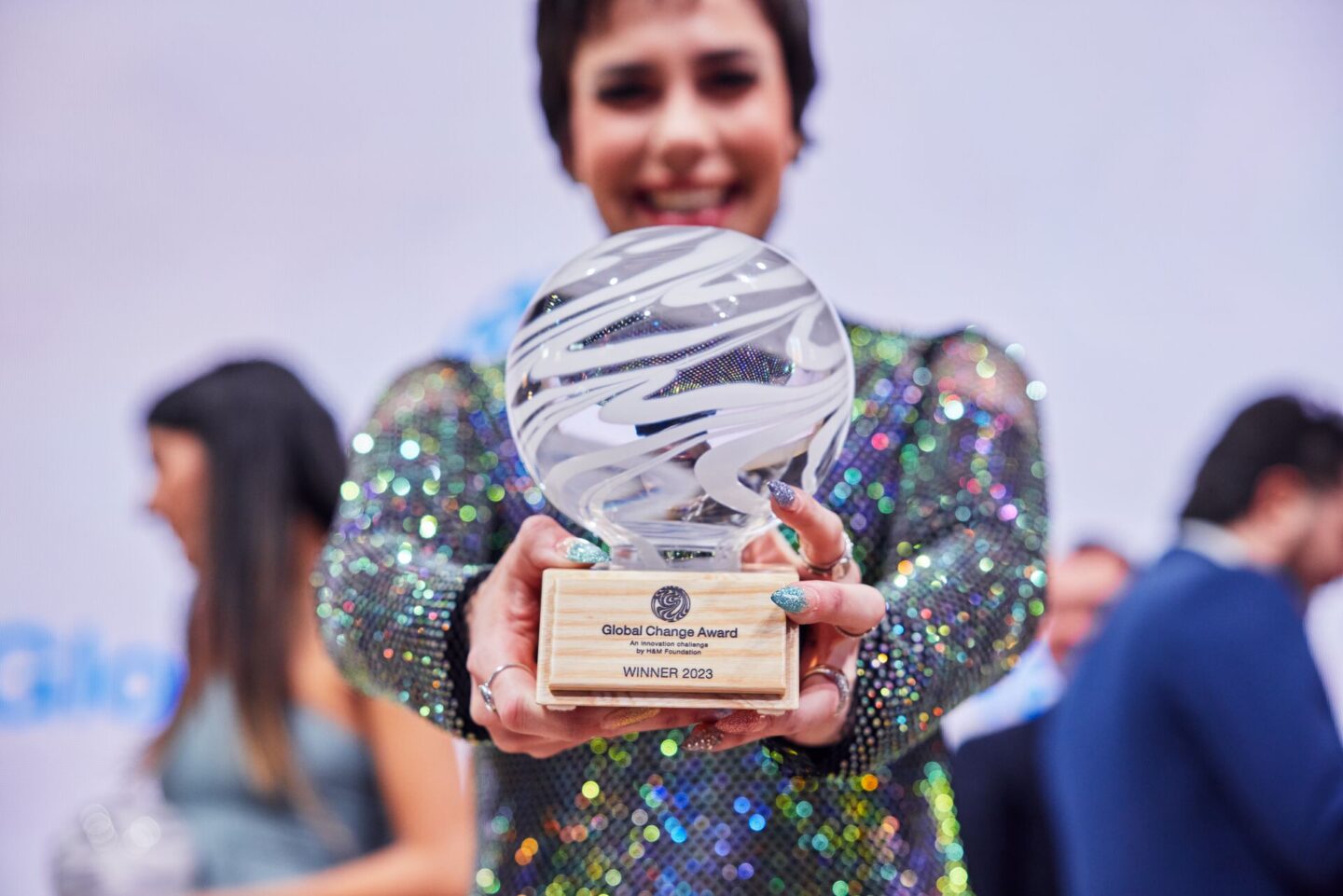
The Global Change Award (GCA) is an innovation challenge initiated by H&M Foundation. Our mission is to accelerate early-stage innovation to support the textile industry in halving its greenhouse gas emissions every decade, reaching net-zero by 2050. The H&M Foundation launched the Global Change Award…
-

GCA WINNERS
Meet our heroes – the winners of the Global Change Award – and find out how their innovations are reinventing the fashion and textile industry.
-

Changemaker programme
The Changemaker Programme is at the heart of the Global Change Award. It’s a yearlong journey designed to help each winner develop their idea, grow personally, and understand how their innovation can help rewire the system. Being selected as a GCA winner is just the…