GCA Summit 2026
It’s collaboration, not rocket science
It took more than ambition to put a man on the moon. It required thousands of people working together on problems nobody had solved before.
Decarbonising textiles is our moonshot. And at the GCA Summit 2026, we rallied the innovators, manufacturers, brands and investors that can make it happen. What we learned: the solutions exist, getting people to collaborate will be our giant leap.
Here’s a recap of the day: the key insights, the talks, keynotes and panels you may have missed.
GCA Summit
2026

Stockholm,
Sweden
The collaboration post-mortem
How Circulose prepares for its next chapter

Renewcell had the technology, the capacity and a product that brands loved. Still, the textile impact company went bankrupt in 2024.
One reason behind its insolvency was that it sold pulp, when brands were looking to buy fibre. Another one had to do with price. Renewcell’s product cost more than the virgin alternatives, and that cost gap got wider with every step of the value chain until it didn’t make sense even for the most ambitious brands.
Now the company has been restarted as Circulose. But what’s different this time around? If the industry agrees that collaboration is essential to scaling innovation, why do so many promising solutions still struggle to reach wider adoption? The Circulose story offers a revealing example of what can happen when the technology is ready, but the conditions for adoption aren’t.
At the GCA Summit, Helena Helmersson, Chair of Circulose, put it simply: it’s not just restarting a factory, it’s redesigning a collaboration. Today, the company has 16 partner brands, and some of which plan to switch 30 to 50 percent of their viscose to circular fibre. She had three pieces of advice for those scaling innovative textiles:
- Sell what slots into existing processes, which in Circulose’s case means finished fibre, not pulp.
- Put the price premium where the willingness to pay is. A near-market fibre price plus a yearly licence fee for brands cut the price impact on some products from around 20 to 2 per cent.
- Look beyond your core product and help customers with sourcing, onboarding and traceability.
When there is a conflict between business and sustainability, we all know who will win every time. And that is not because people don’t care. It’s because of how the system is built.
Helena Helmersson, Chair of Circulose and former CEO of H&M Group
Why collaboration breaks
Don’t collaborate until the groundwork is done
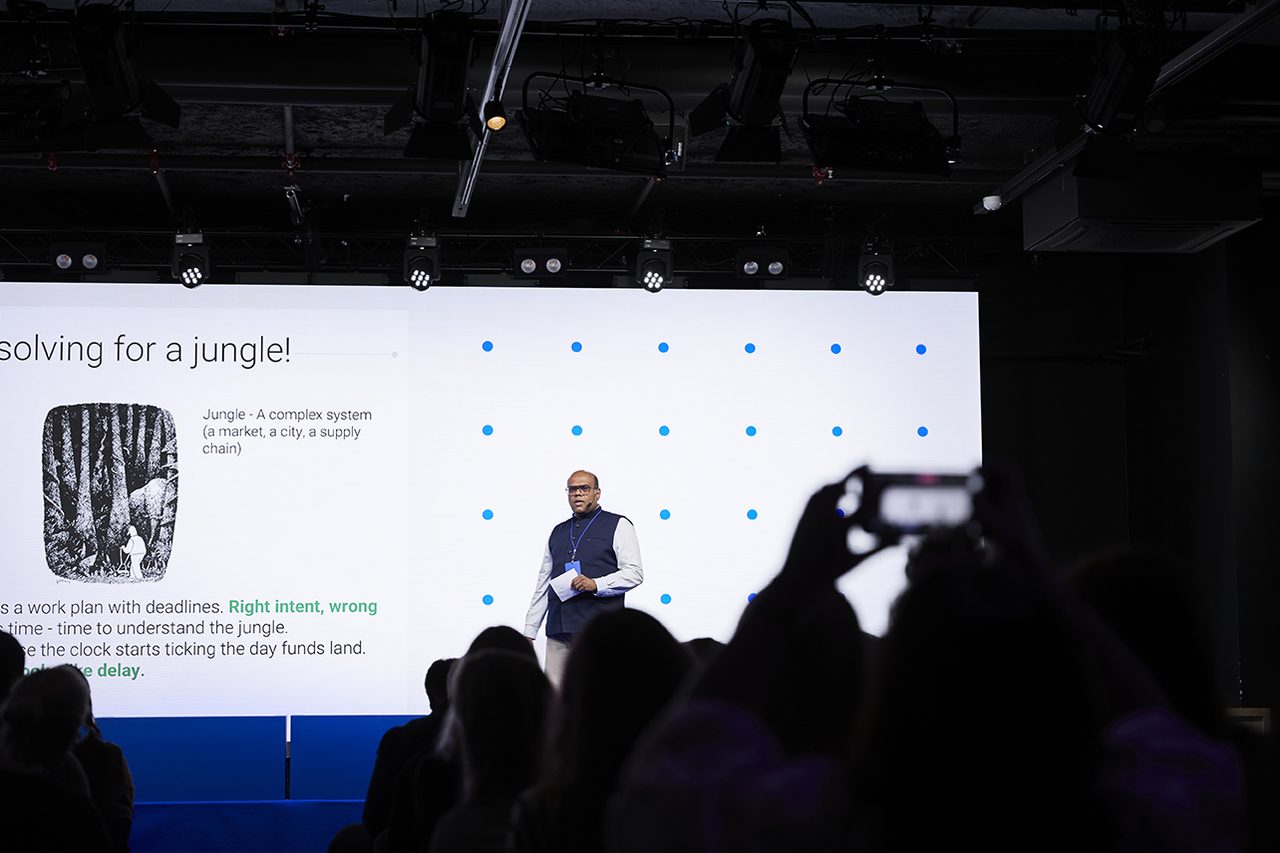
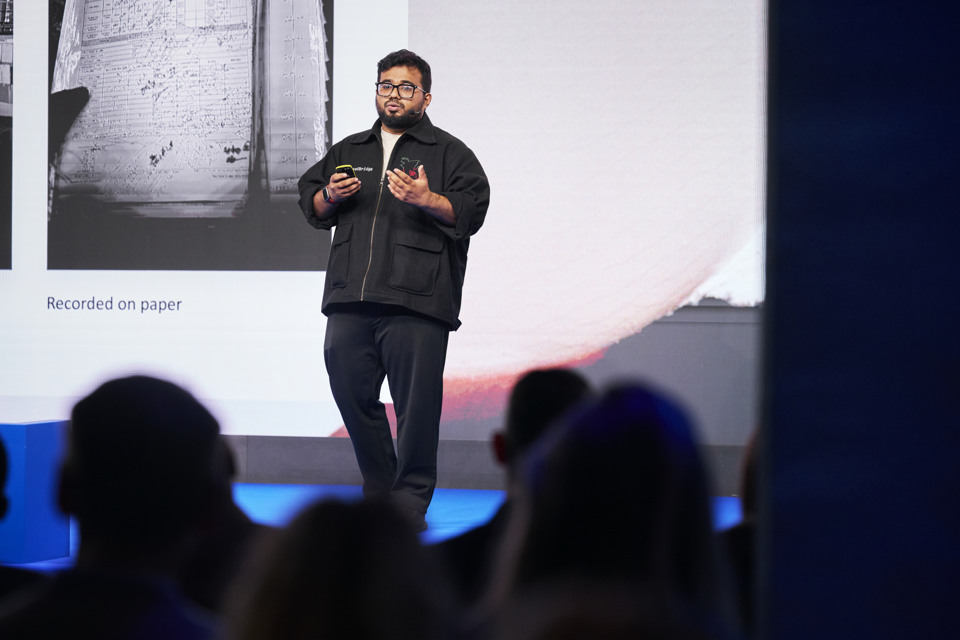
Collaboration keeps breaking at the same stages, said Srikrishna Murthy, Co-founder and CEO of Sattva Consulting. Over the last 15 years, he has witnessed numerous collaborations form and fall apart. The most common mistake, in his experience, is leaving the people affected out of the room where the decisions are made.
According to him, this type of exclusion happens because partners rush past understanding the core problem and let leadership decide the ‘why’ on its own. Fixing it comes down to how the collaboration is set up in the first place.
- Invest in the time it takes to understand the terrain. Demanding speed on day one risks solving the wrong problem.
- Involve every level in shaping the collaboration, not only leadership: the teams who will carry it out and the people it’s meant to serve.
- Fund the coordination and give someone the job of holding it together.
- Share the result, good or bad. In a collaboration, the outcome belongs to everyone who took part.
GCA Summit
2026





Stockholm,
Sweden
GCA 2026: Meet the Changemakers
Watch this year’s GCA winners take the stage to share their innovations.

Tera Mira

RheaCycle

EntroMetrix
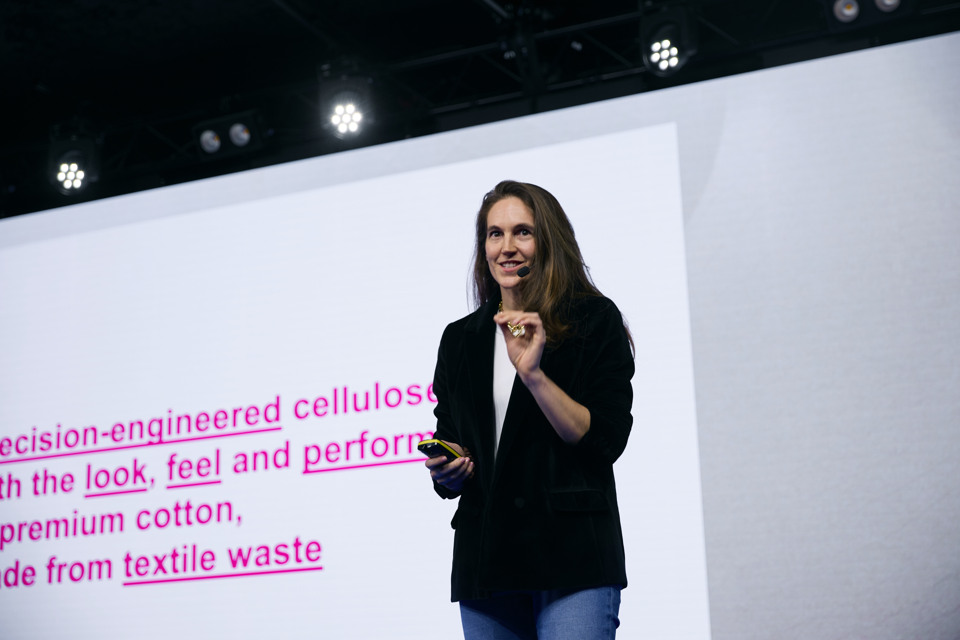
Fiberly

MicroBlue

Alu
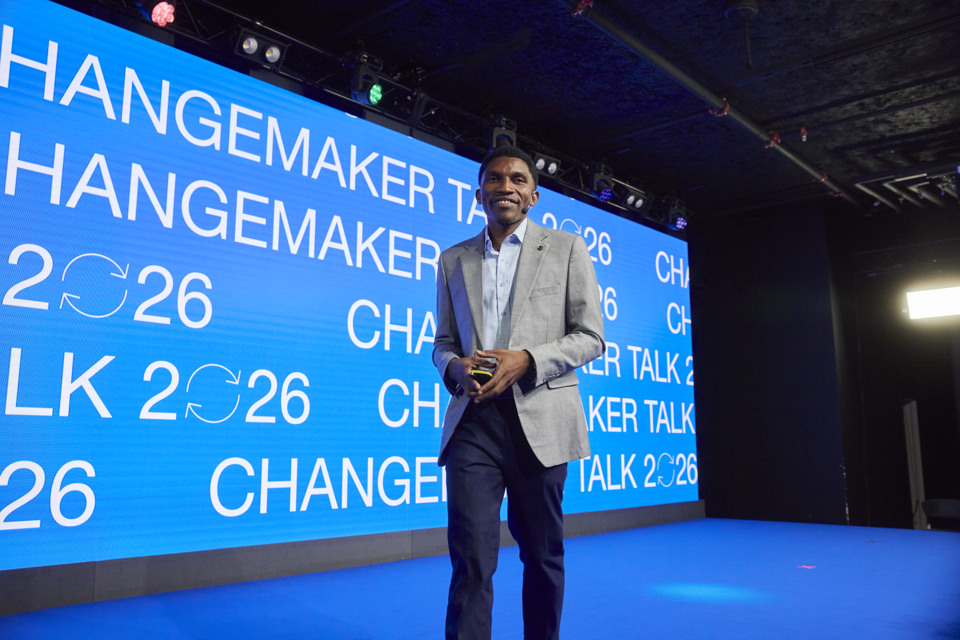
Keltex
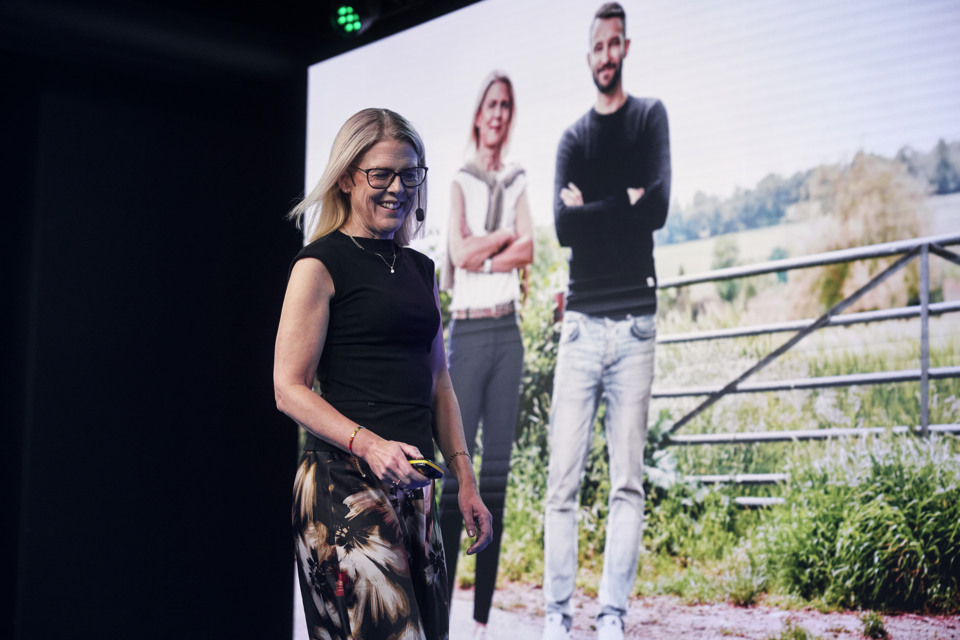
ArtSilk
threadBridge

Agro-Lyocell
Good ideas. Then what?
Set targets with suppliers, not for them

In 2021, 130 brands, retailers and suppliers pledged to phase out coal from their supply chains by 2030 under the Fashion Industry Charter for Climate Action.
This was supposed to be a flagship example of collaboration in the textile industry. Instead, in the five years since, many brands have set their own targets, passed them down to suppliers and pushed for speed over the solutions that fit best.
At the GCA Summit, Anant Ahuja of Shahi Exports, Kim Hellström of H&M Group and Christina Elinder Liljas of the Apparel Impact Institute (Aii) discussed how to work towards the same goals from three different places in the supply chain.
Anant described how quickly the apparel manufacturer Shahi moved to meet the deadline. In just one year, the company built its own biomass supply chain and managed to largely phase coal out of production. However, the short timeline had trade-offs. For example, putting a long-term electrification project on pause.
The panel agreed that bold targets matter. But for suppliers to choose solutions that last, a system fix needs to come first: asking them what they need instead of setting targets and deciding on solutions for them.
Because if suppliers are part of the planning, the entire industry can move faster and further towards net zero.
Radical collaboration by design
Defensiveness is the biggest obstacle to collaboration

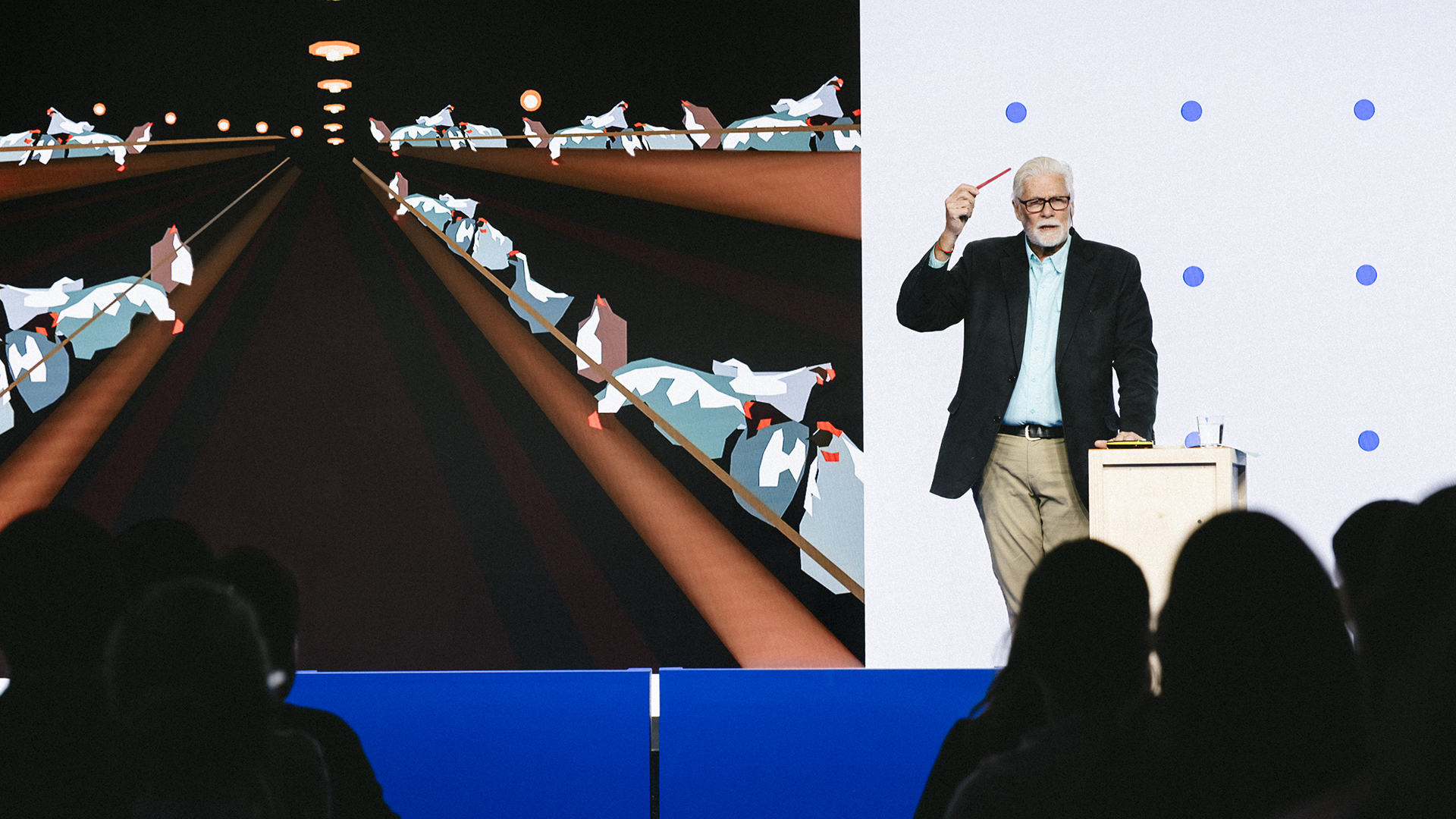
Former California judge Jim Tamm has mediated thousands of workplace disputes and is such an expert at getting people to work together that he’s written a book named Radical Collaboration. Although he doesn’t work in textiles, the problems he points out are familiar to any industry where a wide range of stakeholders depend on each other.
According to Jim, collaboration stalls when people start getting defensive. Relationships, he says, fall into three zones: red, green… and pink.
In the red zone, trust is low, blame is high and people keep their ideas to themselves. In the green, trust is high, blame is low and people are open enough to tackle difficult issues head-on.
Then there’s the pink zone: a less hostile version of red, where everyone nods along, nobody says what they think – and nothing happens. This is where 80 percent of organisations end up. For them to move out of the red or pink zones and into the healthy and highly collaborative green zone, Jim suggests three things:
- Know your defensive reflexes. Perhaps you go quiet, lose your sense of humour or bombard others with information to prove a point.
- Get your head back in the room. Defensiveness shuts down clear thinking. Take a few deep breaths or step out for five minutes and let your brain catch up.
- Have a plan ready – and rehearse it when you’re calm. If you tend to over-explain, stay quiet for 20 seconds. If you go silent, speak up. If you see black and white, look for the grey.
From early-stage ideas to industry adoption
Interest is not commitment: why innovators need a ride-or-die partner

When GCA 2018 winner Algaeing started getting attention for its innovative dyeing solution, the requests poured in: presentations, trials, pilots. But as Co-founder and CEO Renana Krebs learned, interest does not equal commitment.
At the GCA Summit, she took the stage with Lewis Schuler from the textile manufacturer Alpine Group, Algaeing’s partner for the past few years, to explain how they made the move from interest to production.
According to the duo, every new innovation has to convince three parties. The innovator asks if it really works, the mill if it works in bulk and the brand if it’s worth the risk.
And even if all three say yes, it doesn’t mean production can start. Getting from a working pilot to a product the industry can actually use is the hardest part. For Algaeing, three things made all the difference:
- Having someone on the inside. Lewis made himself Renana’s first point of contact whenever something went wrong, and explained problems between her and factories around the world.
- Feedback that changed the product. When scaling up brought one issue after another, Algaeing listened and turned its product from a liquid into a powder, which made it cheaper to use and easier for the industry to adopt.
- Trust proven in action. When other mills working with the same brands came knocking, Algaeing said no.
Instead of asking what our technology can do and perform, we are asking what our technology can do for our partners and the industry.
Renana Krebs, CEO, Nayera Tech Co-Founder Algaeing™



Explore the Summit archive
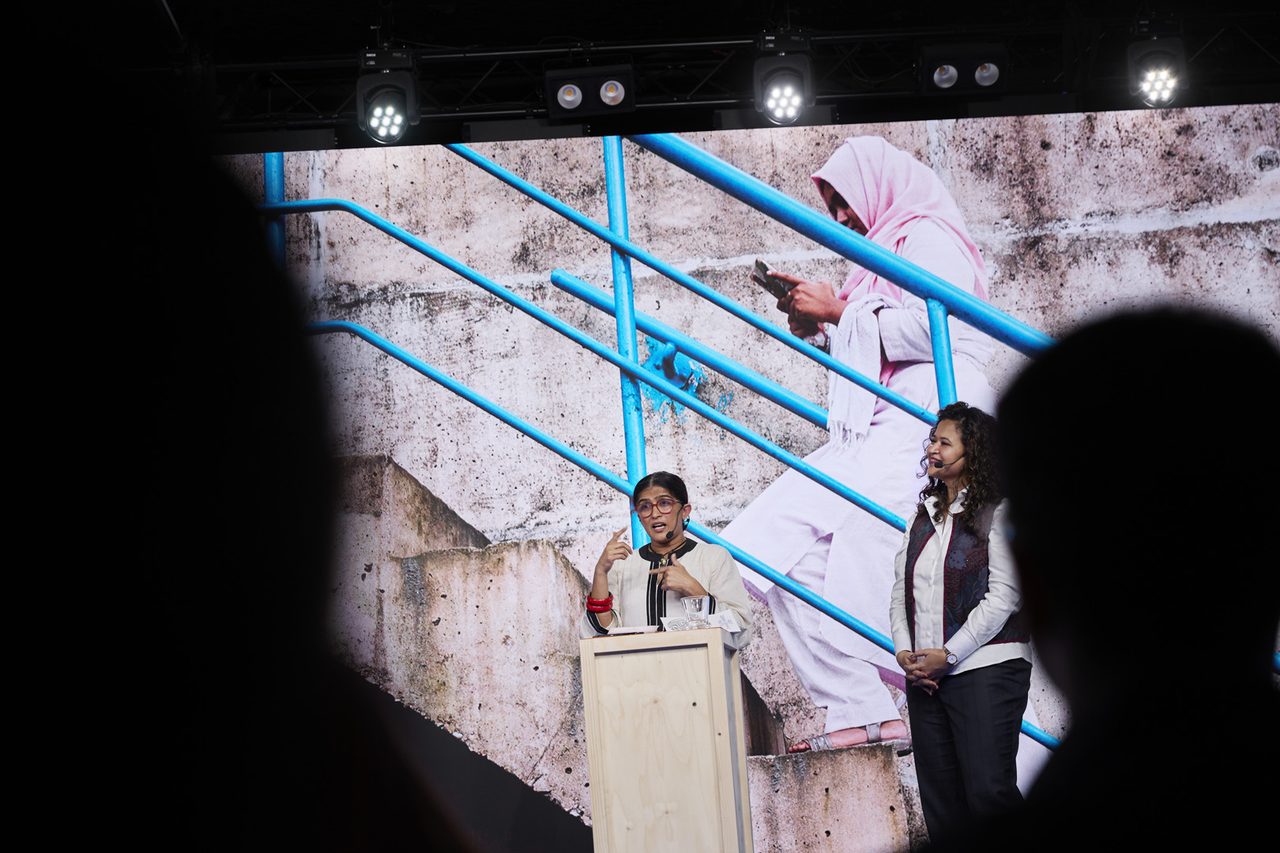
Watch all sessions from the GCA Summit 2026 here and discover standout insights and perspectives shared by innovators, entrepreneurs, scientists and industry leaders over the years.
Christer Fugelsang
2026
Annie Lindmark
2026
Asha Singhal
2026
Vidhura Ralapanawe
2026
Omoyemi Akerele
2026
Owen Gaffney
2025
Aarti Mohan
2025
Linda Greer
2025
Rachel O’Reilly
2026
Solitaire Townsend
2025
Matthew Drinkwater
2025
Johan Rockström
2022