“You can’t design climate solutions without listening to the people most affected”
In Bangladesh, where land is scarce and every hectare matters, the competition between agriculture and renewable energy is intensifying. Agrivoltaics offers a potential breakthrough: a way to produce solar energy without displacing food production or rural livelihoods. This pilot project explores how land- and revenue-sharing models could help tackle some of the country’s biggest overlapping challenges. Meet Rohini Kamal, the lead researcher behind the effort.

Dr. Rohini Kamal, lead researcher for the Agrivoltaics project in Bangladesh.
Developed as a research and demonstration project, this initiative explores how agrivoltaics could help Bangladesh meet its climate and energy goals while protecting livelihoods. Unlike many global models, this pilot is rooted in co-design with the communities it aims to benefit – particularly women, who make up a significant share of the agricultural workforce.
Backed by the H&M Foundation and led by the BRAC Institute of Governance and Development, the two-year pilot is now underway. Solar panels are being installed, crops are being planted, and the groundwork is being laid to measure both environmental and social outcomes.
We spoke with Rohini Kamal about what makes this project different – and what it will take for solutions like this to scale across Bangladesh and beyond.
What first drew you to agrivoltaics in Bangladesh?
– The real struggle countries like Bangladesh face in addressing energy and employment needs, while grappling with climate impacts, drew me to finding renewable solutions that keep vulnerable communities at the centre. Women and farming communities are often the most impacted by climate risks – so they must be included in any just transition.
How can solutions like agrivoltaics help rural communities take part in the climate transition?
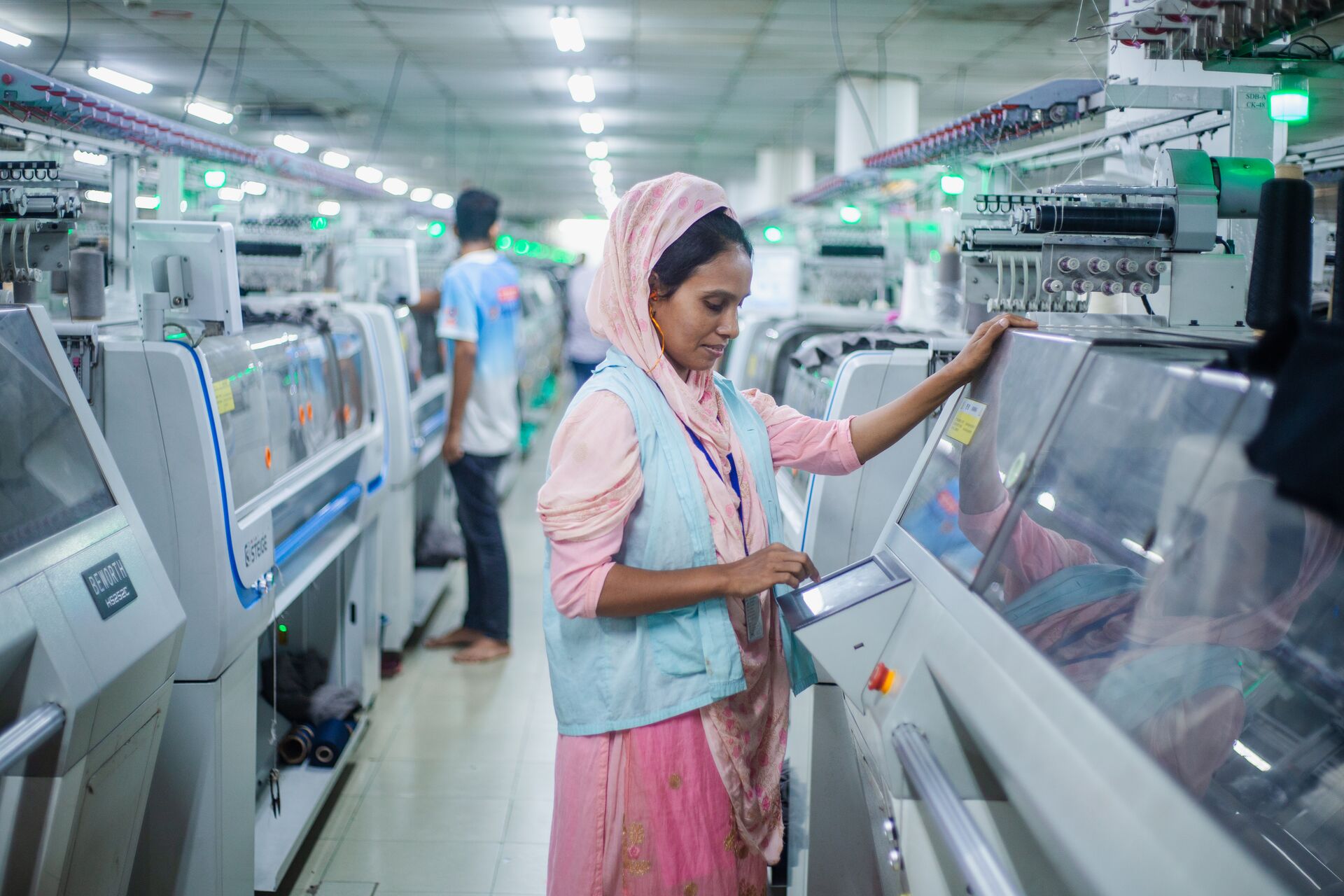
– Farming-based, rural communities make up the largest proportion of households in Bangladesh. Agriculture remains the highest employer of women in the country, followed by the garments sector. Over 80 percent of rural households still depend on agriculture for their livelihoods.
As such, the law prohibits the use of agricultural land for power generation. This restricts solar expansion, since solar is more land-intensive than other energy sources. To get around this, some power companies have been accused of misclassifying land as non-agricultural. This creates conflict, because local communities – often with low formal education – can’t find employment in solar plants and lose access to their land.
Agrivoltaics is a way around this. It allows farming to continue under the panels, so communities don’t have to give up their land or livelihoods in the name of clean energy.
What have you learned from working with farmers about what a just transition really means?
– Bangladeshi farming communities are on the frontlines of climate risk, and are experts in juggling multiple threats – from environmental shocks to price volatility and input constraints. Women agricultural workers, in particular, are balancing household care with paid work – which makes farming in and around their homes especially well-suited. As someone who believes in clean renewable power, I learned the hard truth that expanding renewables without addressing the needs of marginalised farming communities – especially women – cannot be the way forward. If solutions are to work on the ground, they must respond to people’s most pressing needs, ensuring community buy-in and incentivising communities to co-create and co-own the solutions.
How do you see this solution scaling to other regions or sectors?
– This solution has been tested in many countries with varying results. What’s unique about our approach is that it centres the concerns of local communities – through a land-sharing and profit-sharing model that doesn’t penalise either farmers or power producers. If it works, it could become part of the solution to help Bangladesh meet its renewable energy targets.
But this isn’t just Bangladesh’s challenge. A major power-consuming sector here is the garments industry, which produces a large share of the world’s clothing. Global brands and consumers have benefitted from shifting production to low-cost regions like Bangladesh. Now, with growing pressure to lower the carbon content of global products, it’s in the world’s interest to help increase the renewable share of Bangladesh’s energy mix. This project shows how the benefits of global production can be more fairly shared with the communities who bear its costs.
What are you most excited about for the next phase of the project?
– We’ve designed a solar setup tailored to the crops selected by local farmers, and we’re now installing panels and starting to plant. What excites me most is measuring the real impact – for both farmers and power producers – and designing a profit-sharing model that works for both. We’ll also begin surveying how this affects local job opportunities for women. It’s a truly collaborative effort, and now we get to see how it performs in practice.
We’ll continue to share insights and findings as the project progresses, to inform future climate solutions that serve both people and the planet.
Press contact
Head of Communications
In brief
This agrivoltaics pilot in Bangladesh explores how solar energy and agriculture can coexist on the same land. Led by researcher Rohini Kamal and grounded in co-design with local communities, the project aims to protect rural livelihoods while advancing renewable energy – offering insights for a more just and inclusive climate transition.
Agrivoltaics is the practice of combining agricultural production with solar energy generation on the same land.
Learn more about the project.