Using remittances to strengthen climate resilience ahead of disasters
Climate-related disasters are increasing, putting pressure on communities and humanitarian systems. This project tests how remittances can be used before a crisis hits, to better help households prepare. By combining early-warning systems with financial incentives, it enables faster, more proactive responses to climate risks. The approach, developed by Mercy Corps, aims to reduce losses, strengthen resilience, and unlock new ways of financing climate adaptation.
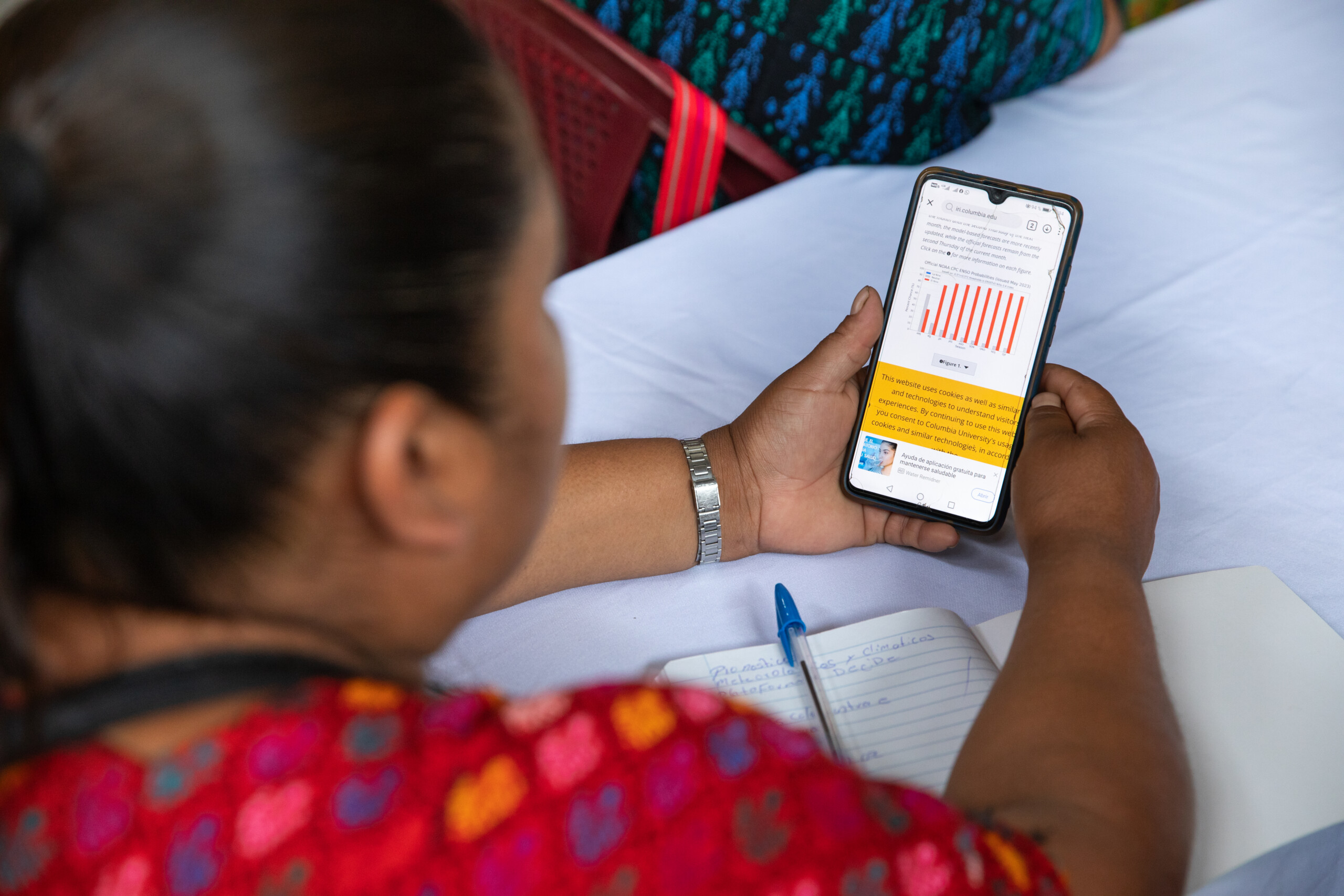
Acting before a disaster strikes is often more effective than responding after. Evidence shows that timely support can reduce food insecurity and limit harmful coping strategies, while every dollar invested in disaster mitigation can save up to six dollars in avoided losses. Yet, only 1% of aid is currently issued before disasters strike, even though 50% of crises are predictable.
This project focuses on shifting the timing of financial support sent by migrants in the US to their families in Guatemala and Colombia. Rather than creating new financial systems, it builds on existing remittance flows, used daily by millions of families, and tests how timing can make a critical difference.
Unlocking private capital through an innovative funding model
Alongside the H&M Foundation, global financial technology platform Adyen is co-funding the initiative, matching the Foundation’s contribution. This signals a broader shift: exploring how financial infrastructure and private capital can play a role in climate adaptation, demonstrating how financial actors can play a more active role in resilience building.
By combining philanthropic funding with private capital and existing remittance systems, the initiative tests how anticipatory action can be financed in practice, not as a parallel system but through mechanisms that already exist.
Testing how early remittances can support preparedness
The project is implemented by Mercy Corps in partnership with Remitly and focuses on a simple but powerful idea: enabling people to send money earlier when a climate risk is forecast.
When early-warning triggers indicate an approaching disaster, such as drought or flooding, remittance senders receive a notification encouraging them to transfer funds ahead of time. The money is sent through existing channels but arrives when it is most needed – before the crisis unfolds.
This allows families to take practical steps, such as securing food, reinforcing homes, or planning evacuation. Mercy Corps complements this with local programmes that support communities to understand and act on climate risks, as well as collaboration with governments and local institutions.
From local action to systemic change
The project works across multiple levels to strengthen resilience:
- Testing early-warning alerts and supporting households to act early through financial incentives with up to 400,000 remittance senders
- Collaborating with communities to identify practical adaptation measures based on local knowledge
- Engaging governments and local institutions to integrate anticipatory approaches into disaster planning
This combined approach helps ensure that solutions are grounded in real needs while also contributing to longer-term systems change.
Building evidence to scale anticipatory action
A core objective is to generate evidence on how remittance-based anticipatory action works in practice. The project will assess whether earlier financial support leads to improved preparedness and reduced losses, while also exploring how the model can be expanded to new contexts. Parts of the funding supports Mercy Corps in exploring expansion beyond Guatemala and Colombia. By testing how existing financial flows can be used differently, the initiative aims to provide a practical model for scaling anticipatory action.
Project time period
Financial Support:
SEK 4 million (USD 430,500)
Co-funder:
Adyen
Focus Areas:
Partners:
Countries:
Status: