An open-access workshop toolkit enables brands, suppliers, policymakers and investors across the textile industry to apply the System Map in their own work, identifying leverage points to halve emissions and enable a just transition.
The System Map: a practical tool to help you understand, navigate and transform the textile system.
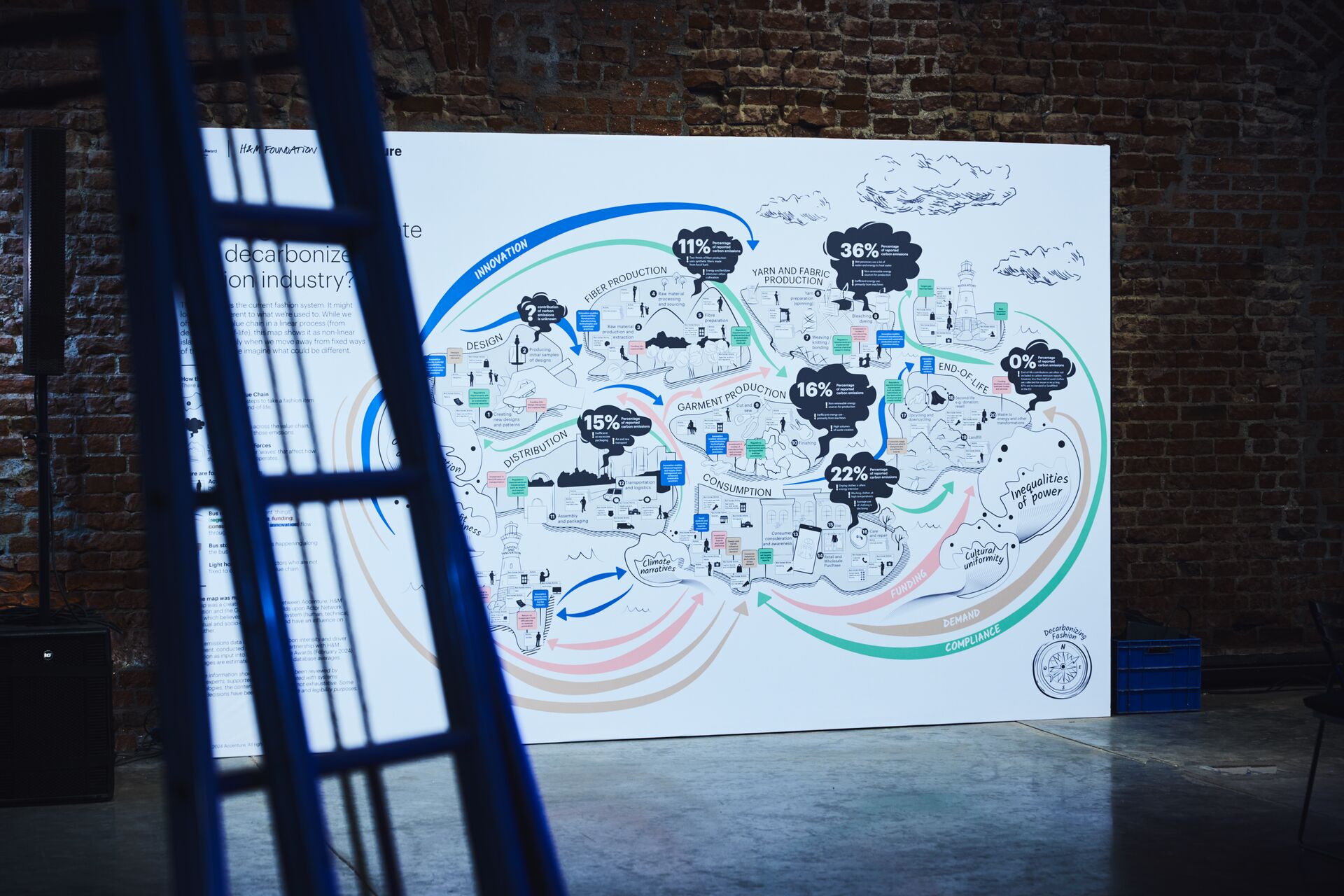
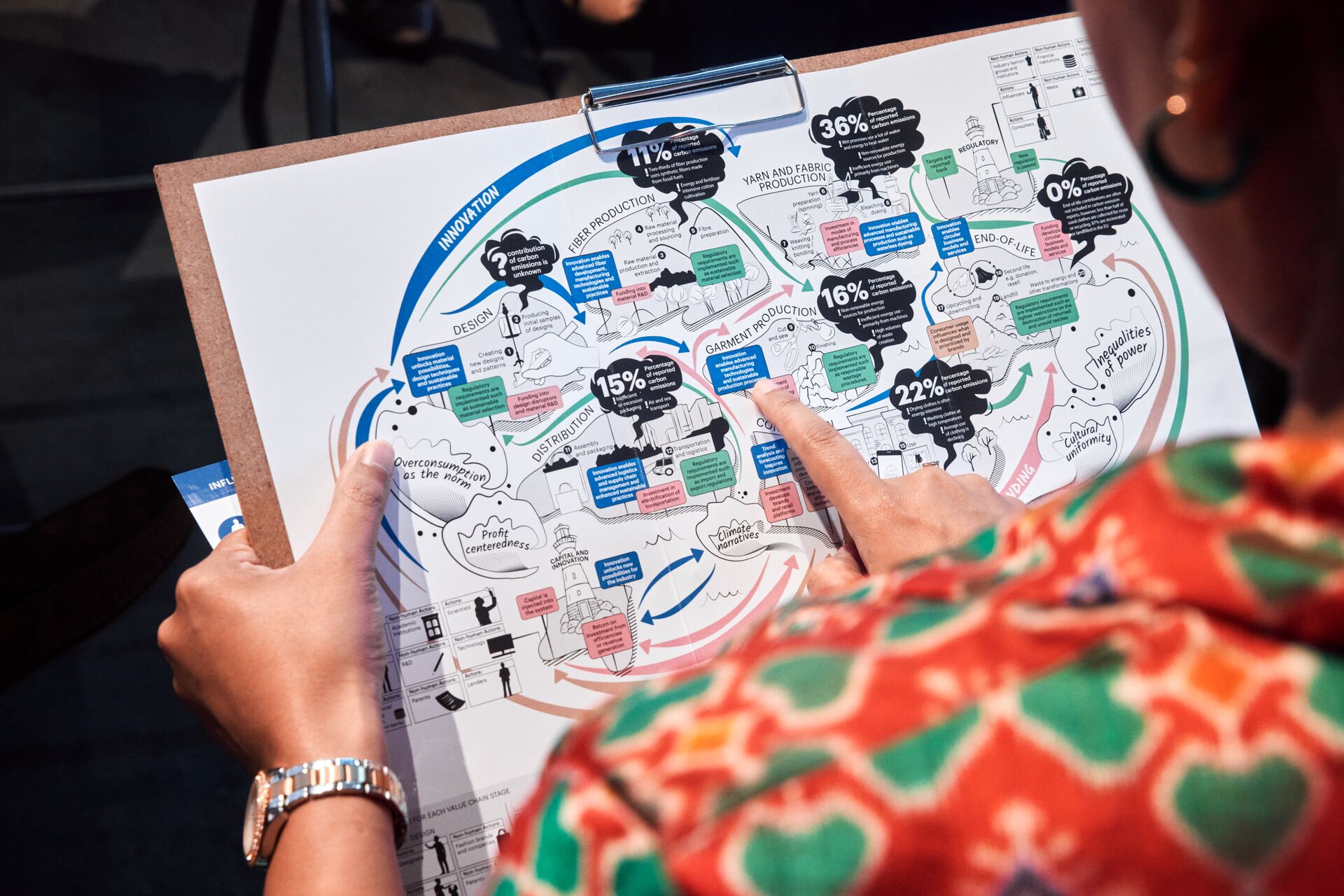
The textile industry must halve its greenhouse gas emissions every decade until 2050. The challenge is not lack of ambitions; it’s lack of alignment. In 2024, H&M Foundation introduced the System Map, a visual framework that reimagines the textile industry as an interconnected ecosystem shaped by flows of capital, incentives, innovation, regulation and demand.
Now, H&M Foundation is launching a practical, open-source toolkit to help organisations turn that systemic insight into action. While the System Map provides a shared understanding of how emissions, power and value flows across the industry, the new toolkit enables actors to apply it within their own organisations and partnerships.
Change won’t come from islands of perfection – in a system as interconnected as fashion, every part influences the other. The System Map helped make that visible and now this toolkit makes it usable. If we want to halve emissions every decade, we have to stop optimising in silos and start pulling the right levers together.
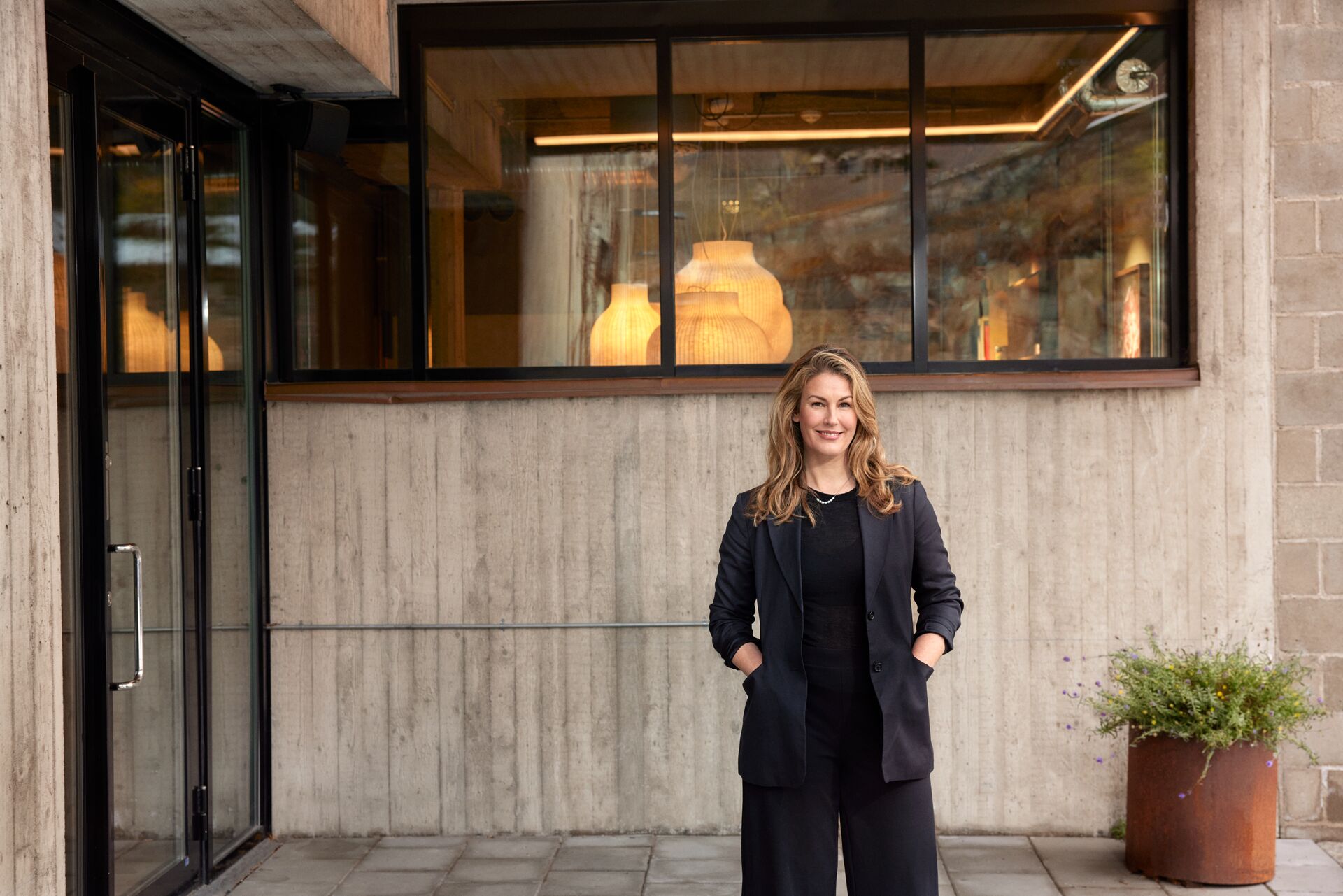
Anna Gedda, CEO H&M Foundation
The System Map challenges the traditional linear view of fashion. It visualises:
The full textile value chain, from fibre to end-of-life
Indicative carbon emissions across stages
Systemic forces such as profit-centredness, power imbalances and cultural norms
By mapping actors, flows and leverage points, it reveals where decisions can unlock system-wide impact and where well-intended action may simply shift burdens elsewhere.
To translate this into practice, H&M Foundation engaged Accenture to develop a facilitation toolkit that can be delivered digitally or in person. The toolkit includes:
A keynote introduction to the System Map
Workshop 1: Identifying your role and sphere of influence
Workshop 2: Pinpointing systemic leverage points
Workshop 3: Reimagining a decarbonised and just future textile system
The sessions are designed for brands, manufacturers, innovators, policymakers, investors, researchers and civil society organisations.
Decarbonisation must go hand in hand with a just transition. Climate action cannot shift costs onto the most vulnerable parts of the value chain. By providing a structured way to examine power dynamics and structural barriers, the toolkit supports more coordinated and equitable climate strategies.
The System Map remains publicly available as an open industry resource. With the launch of the toolkit, the H&M Foundation aims to move the conversation from understanding the system to actively reshaping it. Structural transformation will not come from isolated efforts. It will come when more actors work from a shared view of the system and choose to redesign it together.
The System Map and toolkit are available for download here.
An open-access toolkit launched for the textile industry to coordinate climate action using H&M Foundation’s System Map. It helps organisations identify leverage points to halve emissions while ensuring a just transition, promoting collaborative systemic change in sustainability efforts.
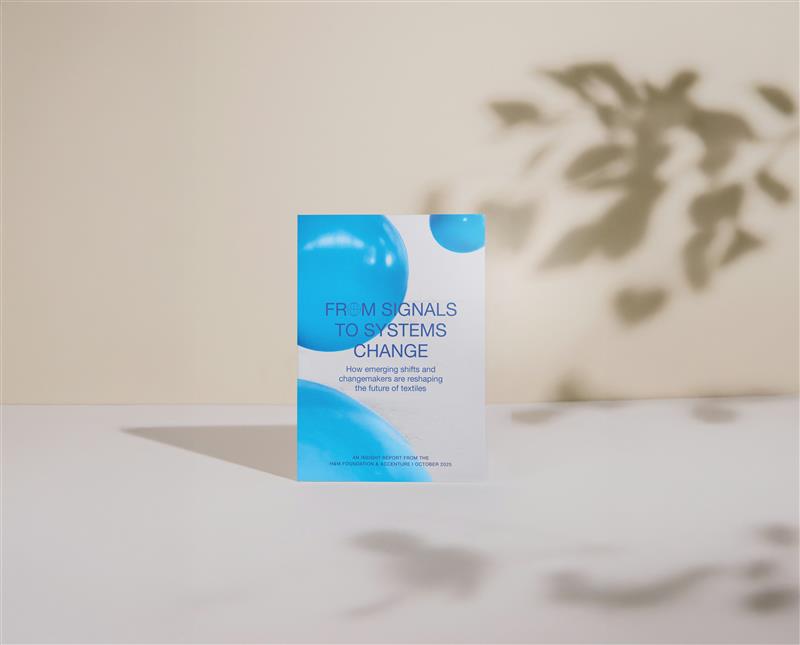
H&M Foundation, in collaboration with Accenture, has unveiled From Signals to Systems Change, an insight report calling on the fashion industry to rethink its role in transformation. At its core is the Reimagined System Map, a pioneering open-source framework that visualises how early-stage innovation could…
By mapping out the path to industry-wide decarbonisation, the System Map helps turn reflection into action, guiding the textile sector toward meaningful change. Now, we are making the map available to the entire industry – inviting actors across the value chain to explore their role…
We asked Anna Gedda, CEO of the H&M Foundation, to reflect on what she predicts for the textile industry in 2026. Based on close collaboration across the value chain, Anna shares three shifts that stand out, and why embedding sustainability into everyday decision-making matters more…