5 moments that shaped the GCA Summit 2025
This year’s Global Change Award Summit in Stockholm wasn’t for passive bystanders. It was a creative lab – a space for rewiring how we think, what we value and how we act to shape a new operating system for fashion.
The stage programme included voices like Matthew Drinkwater, Owen Gaffney, Dr Okito Wedi, Henry Coutinho-Mason, Anant Ahuja and many more, all sharing their expertise to spark new ways of thinking about fashion’s future.
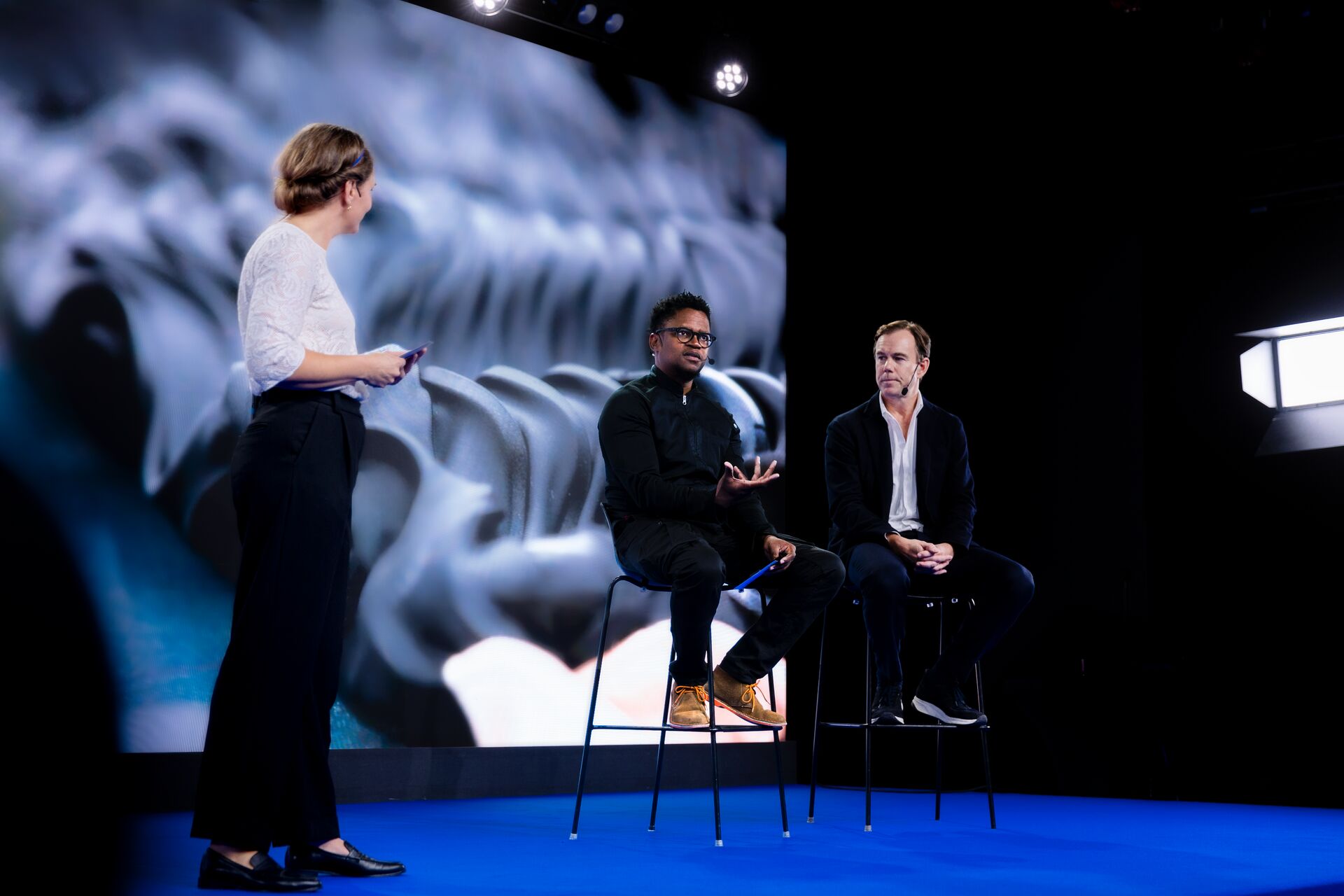
Miles Kubheka, CEO Wakanda Food Accelerator and Karl-Johan Persson, Board member H&M Foundation, took the stage for a conversation on the future of innovation and the next decade.
During one full day in October, scientists, entrepreneurs, investors and creatives came together for one vibrant day centred on a single, urgent question: how can we rebuild the textile industry for the future we need – decarbonised, fair and made to last?
Here are five moments and ideas that defined the day, and links to where you can watch all the talks in full.
1. If the system is people, only a system of people can change it
Early in the day, Solitaire Townsend, Co-founder and Chief Solutionist at Futerra, set the stage with a line that stuck: “The system is a person”. In her talk, Why systems change – and why now? she reminded the audience that transforming fashion isn’t about fixing an abstract machine – it’s about us. “There’s no God of system change managing it all for us. It’s just a bunch of people. Change depends on our ability to see one another, trust one another and take responsibility for our part in the system.”

Watch Solitaire Townsend’s talk
2. How to decarbonise with purpose
Environmental scientist Dr Linda Greer, one of the world’s leading experts on industrial pollution, was another powerful voice on stage.
And she didn’t mince her words. “What has gotten us this far is not going to get us where we need to be.”
Her talk, Decarbonising textile manufacturing: Targeting what matters the most, set out a clear challenge: the industry’s emissions are still rising, despite years of good intentions. The data spoke for itself: less than three per cent of facilities account for nearly two-thirds of the industry’s total emissions.
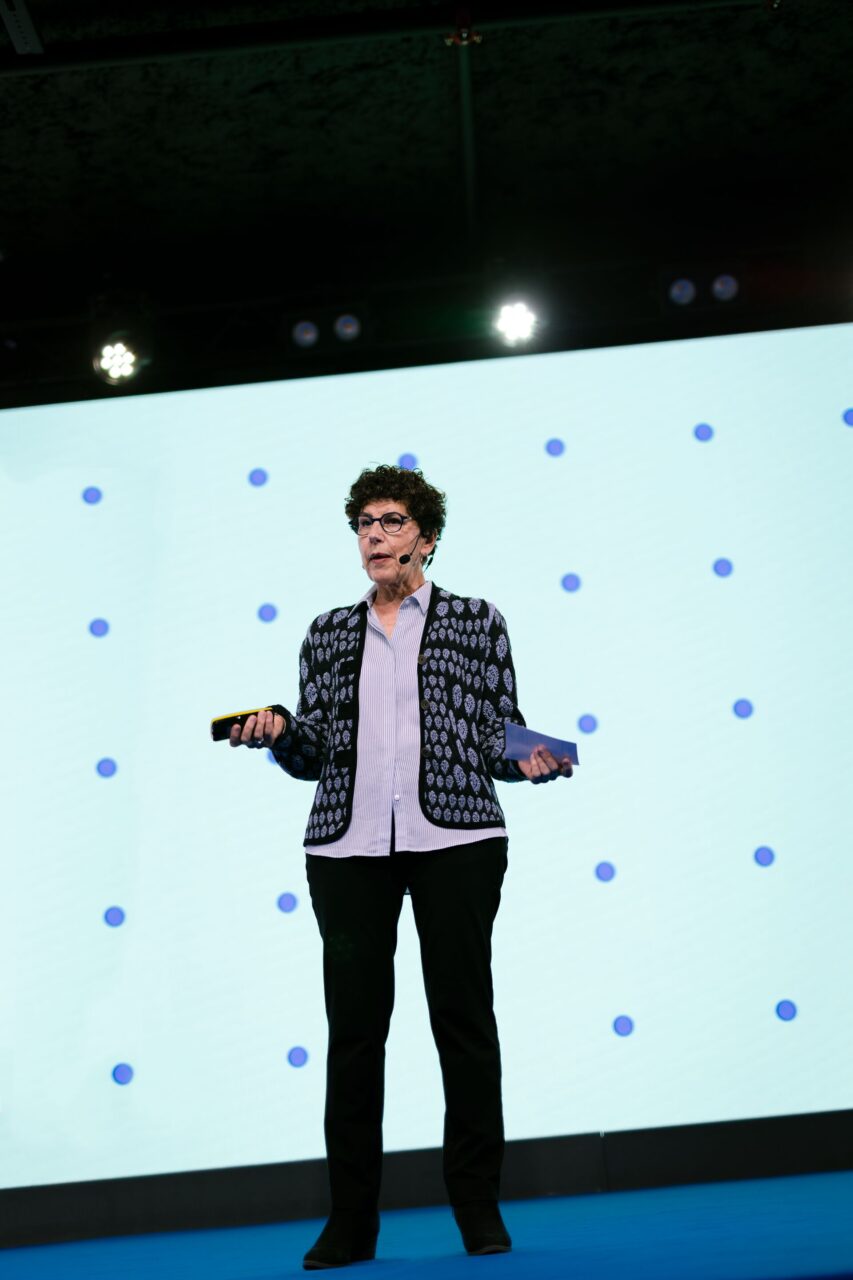
After the numbers came the people. Aarti Mohan, Co-Founder and Partner at Sattva Consulting, moved the spotlight to the workers who power the textile system. Her talk, Beyond Emissions: The Human Impact, asked the uncomfortable but vital question: Are we decarbonising fashion leaving its workers behind?
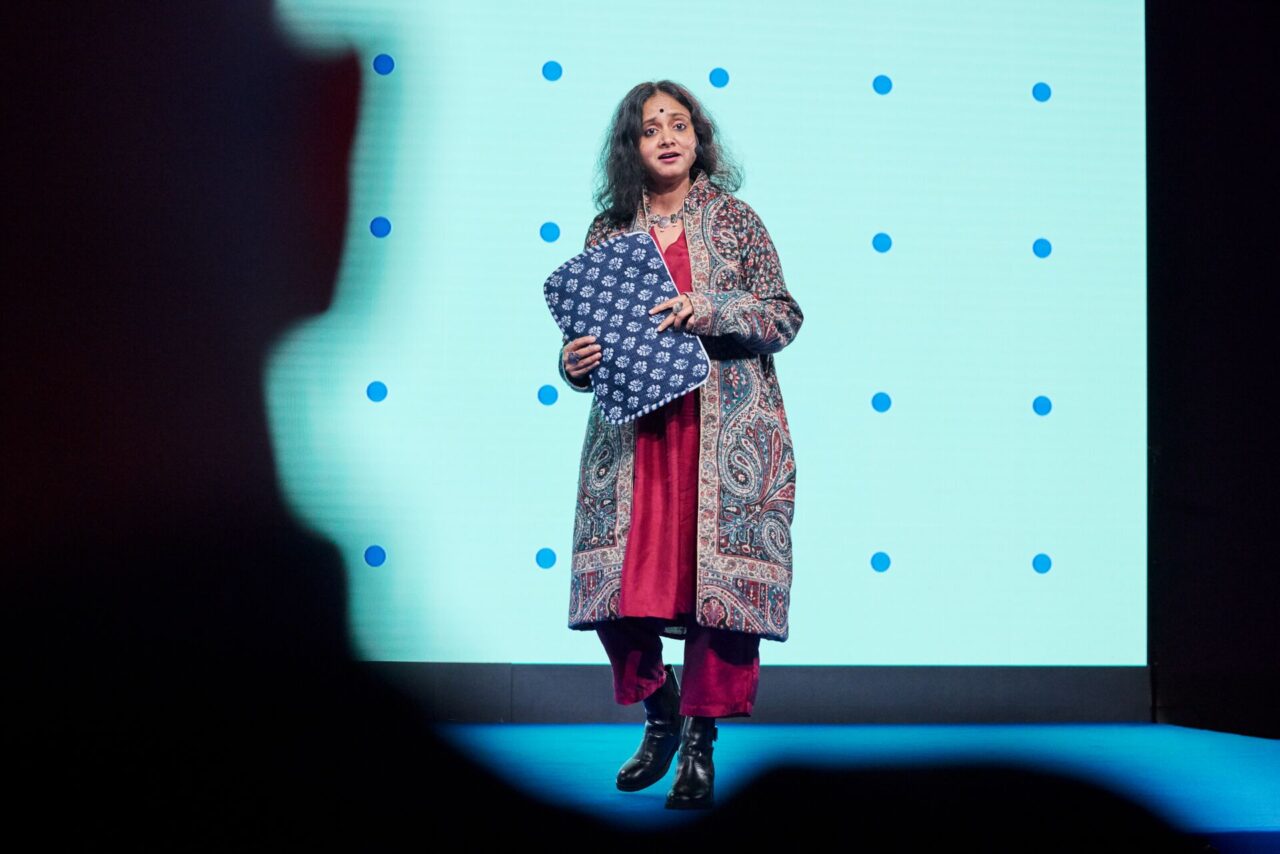
She reminded the audience that climate action must also be social action. Many textile workers still face informal jobs, unsafe conditions and unstable wages – and without care, the race to cut carbon could deepen inequality. Yet done right, decarbonisation can create safer, fairer work and new opportunities. “We need to look beyond the numbers,” she said, “and also look at the lives.”
Watch the talks of Dr Linda Greer and Aarti Mohan, including their joint discussion on how to decarbonise fashion in a just way.
3. The invisible forces that hold the system in place
The conversation then turned the lens inward – to the human mind. Psychologist Katarina Blom opened her talk, The human mind in complex systems, with a crucial dilemma: we’re trying to redesign vast, complex systems – yet our brains were built to handle small ones.
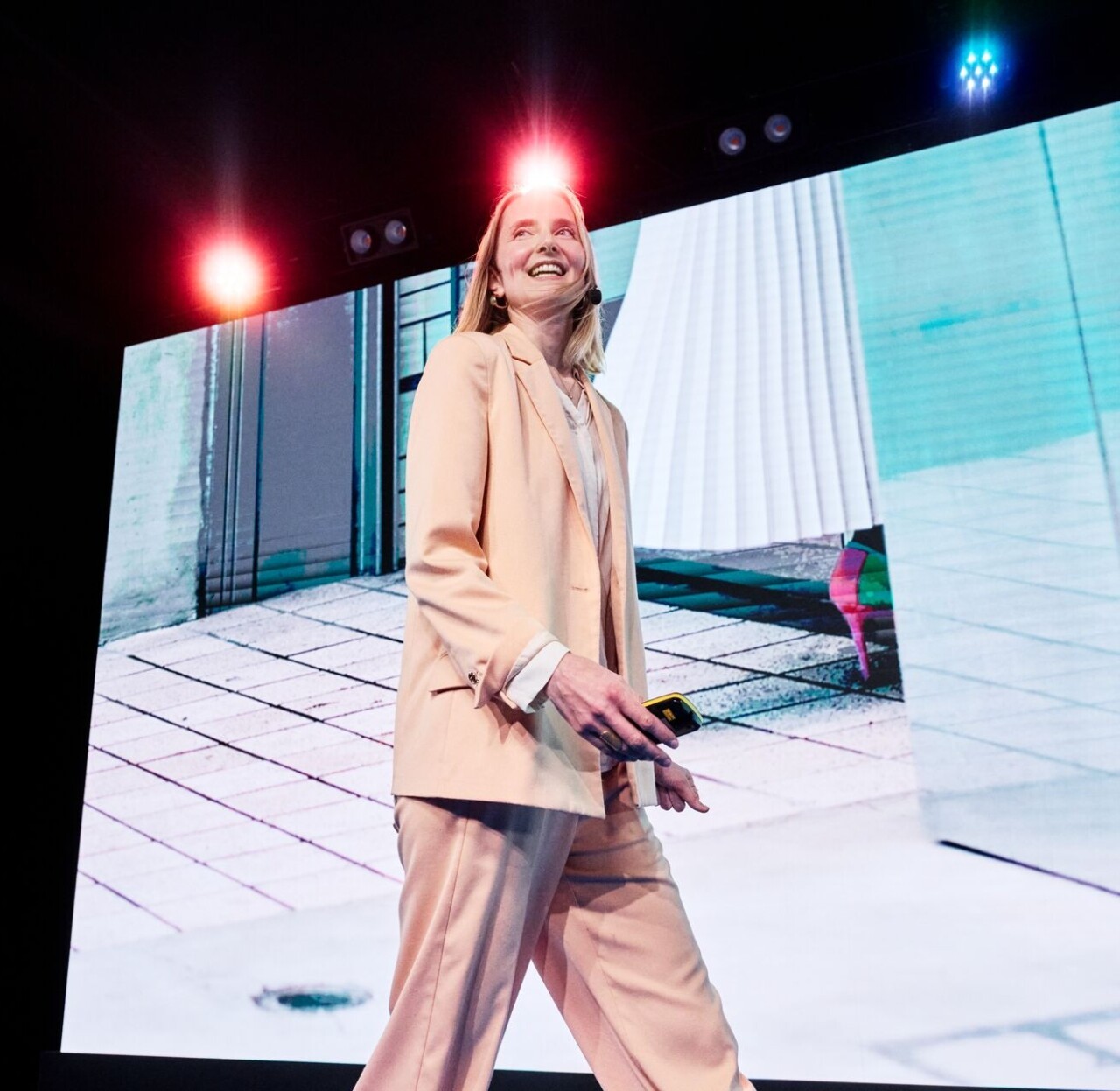
Blom reminded us that our minds are still primarily wired for the village, the family, the small circle. She also explained how positive emotions help us lift our gaze and see the bigger picture. “When we feel safe and happy,” she said, “we can think long term, learn new things and connect with others.”
The takeaway was obvious: relationships drive behaviour. People don’t copy policies, they copy people. And when one in four members of a group adopts a new behaviour, the rest often follow.
4. Meet the changemakers
Between deep-dive discussions and system-shifting insights, this year’s Global Change Award winners kept the energy pulsing through the room.
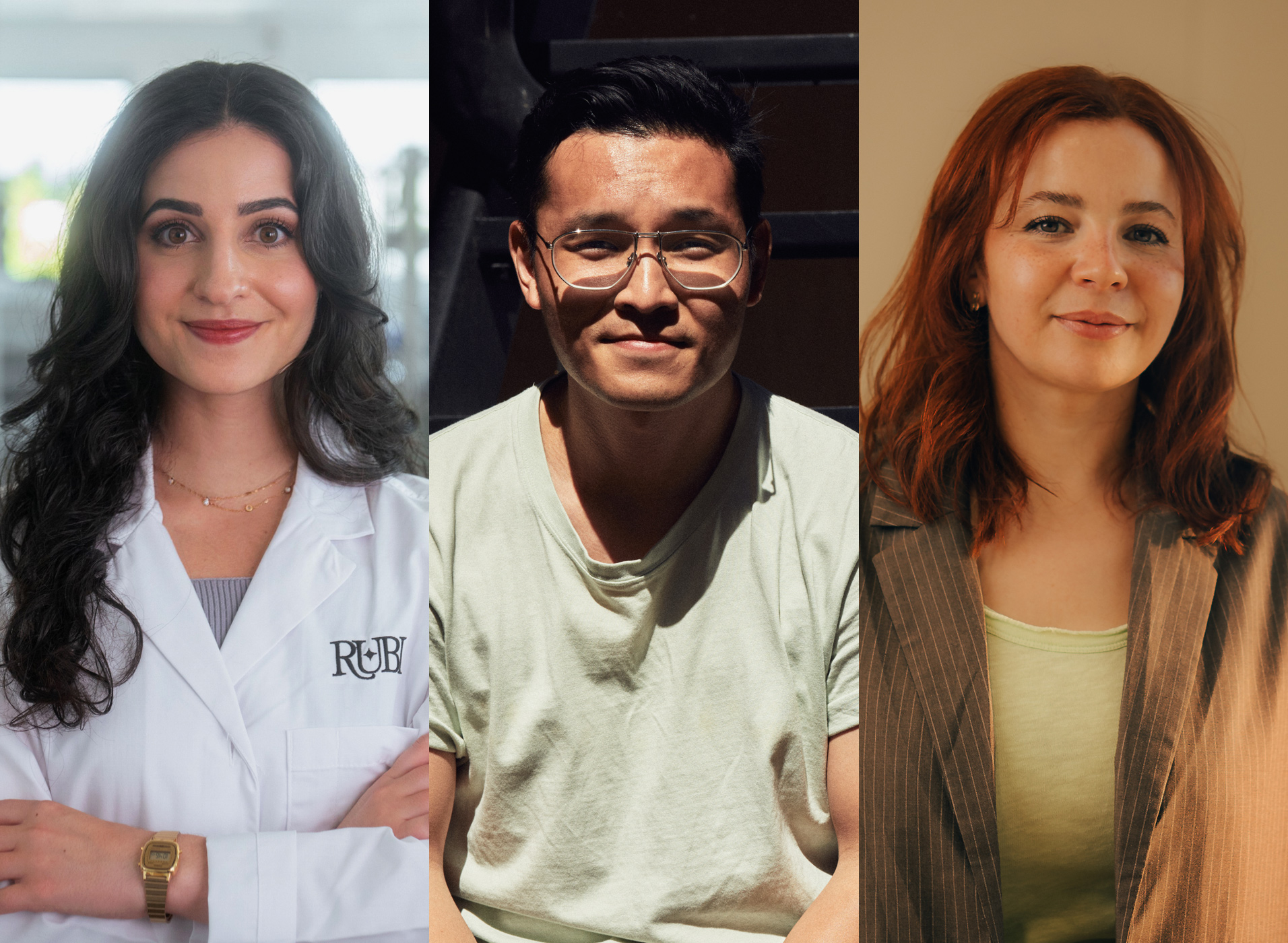
They showed that radical innovation is already here: from China’s DecoRpet, using a low-temperature process to strip dyes from polyester for 99.9% pure recycled PET, to the UK’s Thermal Cyclones, replacing fossil-fuel steam with electric heat pumps that cut energy use by 75%, the message was clear: innovation is already rewriting the rules of production.
Others challenged the invisible layers of the system, like PulpaTronics, creating recyclable, metal-free RFID tags for circular traceability, or Loom, connecting wardrobes with designers to turn unworn garments into one-of-a-kind upcycled pieces.
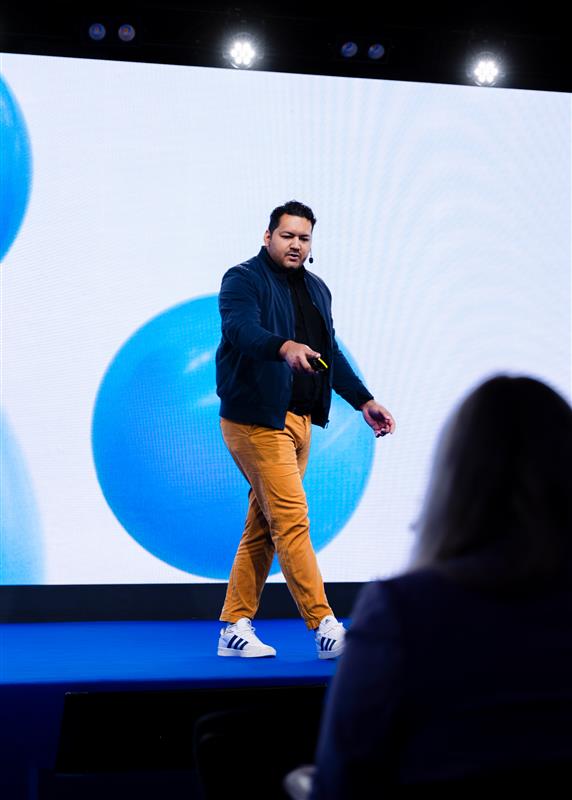
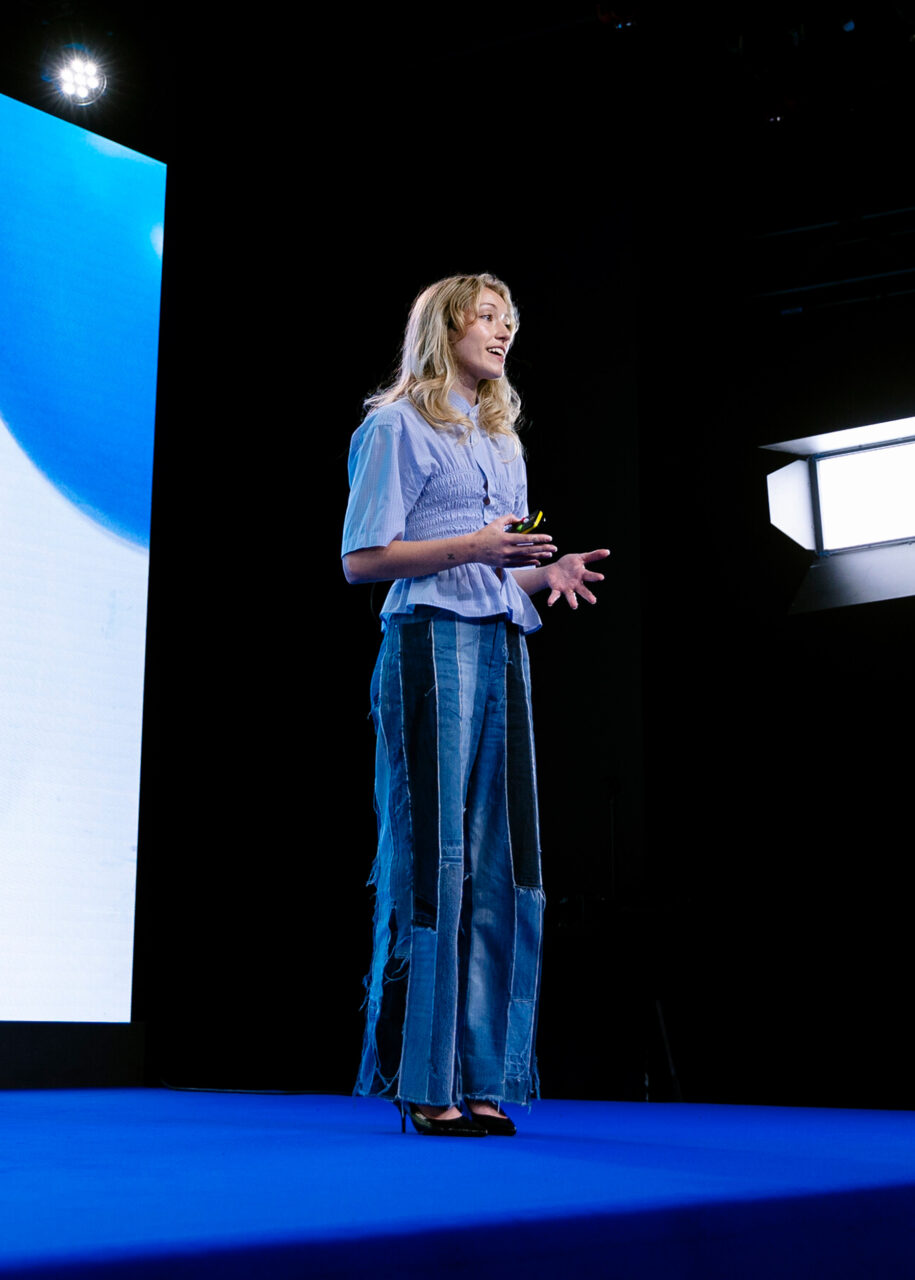
Material innovators were equally in motion: CircularFabrics recovering high-quality nylon from blended waste, Brilliant Dyes making colour from algae, and A Blunt Story crafting footwear soles from agricultural waste. And at the community level, The Revival Circularity Lab in Ghana reminded everyone that transformation also begins from the ground up – in markets, with makers, and through shared ownership of change.
See all Global Change Award 2025 Changemaker pitches.
5. Shaping the decade ahead
As the summit drew to a close, Miles Kubheka, CEO Wakanda Food Accelerator and Karl-Johan Persson, Board member H&M Foundation, took the stage for a conversation on the future of innovation and the next decade.
Miles challenged the industry to break its silos and expand who’s at the table. “We need to make the circle bigger. We’ve had the same people talking to the same people about the same problem – and then we’re confused why we’re not solving it?” he said.
Karl-Johan agreed, calling for more collaboration, and more patient capital.
I’m optimistic about the future. If you combine the innovation, the entrepreneurs, the energy and the urgency we’ve seen today, and the collaboration across the ecosystem – it’s just going to happen. Ten years from now, we’ll be in a much stronger position.
Karl-Johan Persson
All sessions from the GCA Summit 2025 are now available to watch on H&M Foundation’s YouTube – dive in and get inspired!
Press contact

Head of Communications
In brief
The Global Change Award (GCA) is an innovation challenge initiated by H&M Foundation. Our mission is to accelerate early-stage innovation to support the textile industry in halving its greenhouse gas emissions every decade, reaching net-zero by 2050.
Learn more about GCA