“The choices we made in the difficult years shaped the factories we run today”
Meet Kajari Hossain – a fictional factory owner from Dhaka, imagined in our science-based scenario Reweaving Fashion & Textiles 2050. Her voice is rooted in research, inspired by today’s industry signals, and offers a glimpse of what a just, decarbonised future for textile production might look like.

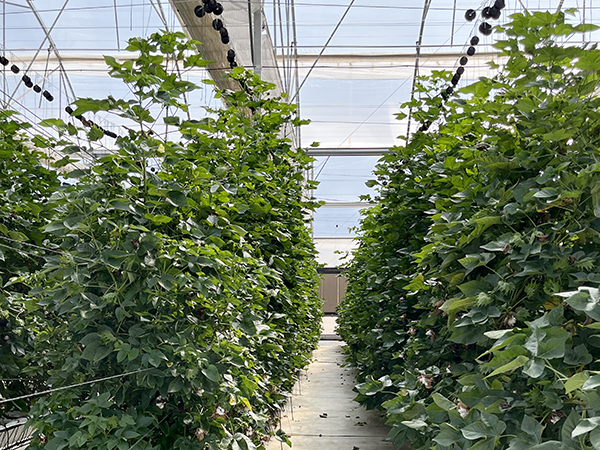
Generic image used for illustrative purpose.
Dhaka, 2050
Back in those years after the pandemic, my father was still running the mill, and I was learning by working beside him. Orders were unstable, energy prices unpredictable. My father held things together as best he could, trying to keep people employed while planning for a future none of us could quite see.
Those years weren’t about big leaps – they were about steady problem-solving. Supply chains kept breaking, heat became a constant challenge, and we had to stay nimble to keep the business running. We mapped our water use, experimented with solar power, and made small adjustments wherever we could. Buyers were finally beginning to talk about co-investment instead of compliance. I remember the complexity clearly – fear on one side, possibility on the other.
The 2030s were a turning point. Some brands moved parts of their production closer to their main markets, and we felt the shift immediately. But it also forced us to specialise, to rethink our machinery, and to invest in training rather than expansion. Workers’ voices began shaping decisions, from adjusting working hours on the hottest days to how new machines were introduced. It was also the decade when many of the innovations we’d talked about for years finally became affordable and mainstream. Automation came in stages – uneven and often hesitant – but over time it made work safer and opened new technical roles, especially for women.
When I took over the factory in the mid-2040s, it was no longer the business my father had inherited from his father. It was smaller, more resilient, and part of a wider ecosystem of partners and industry stakeholders. As this new system took shape, we focused on upskilling our workers and staying connected with the community, so the transition made sense for them too. Most of our energy now comes from solar, backed by a shared micro-grid that keeps us running through heatwaves and outages.
People used to call those decades a “polycrisis”. Maybe they were, but living through them also taught us what we’re capable of. And from where I stand today, the real story is how we learned to adapt – not perfectly, but together.
Press contact
Head of Communications
It Matters ny H&M Foundation
This article was part of our newsletter It Matters. Want to stay in the loop? Subscribe to our coming editions.