Srikrishna Murthy: The overlooked work behind successful collaboration
Collaboration keeps breaking in the same few stages, according to Srikrishna Murthy, Co-founder and CEO of social impact advisory Sattva Consulting. After 15 years of building partnerships in India, including Sattva’s role in the H&M Foundation-backed Saamuhika Shakti initiative,he explains what the textile industry can learn from common mistakes in collaborations across sectors.

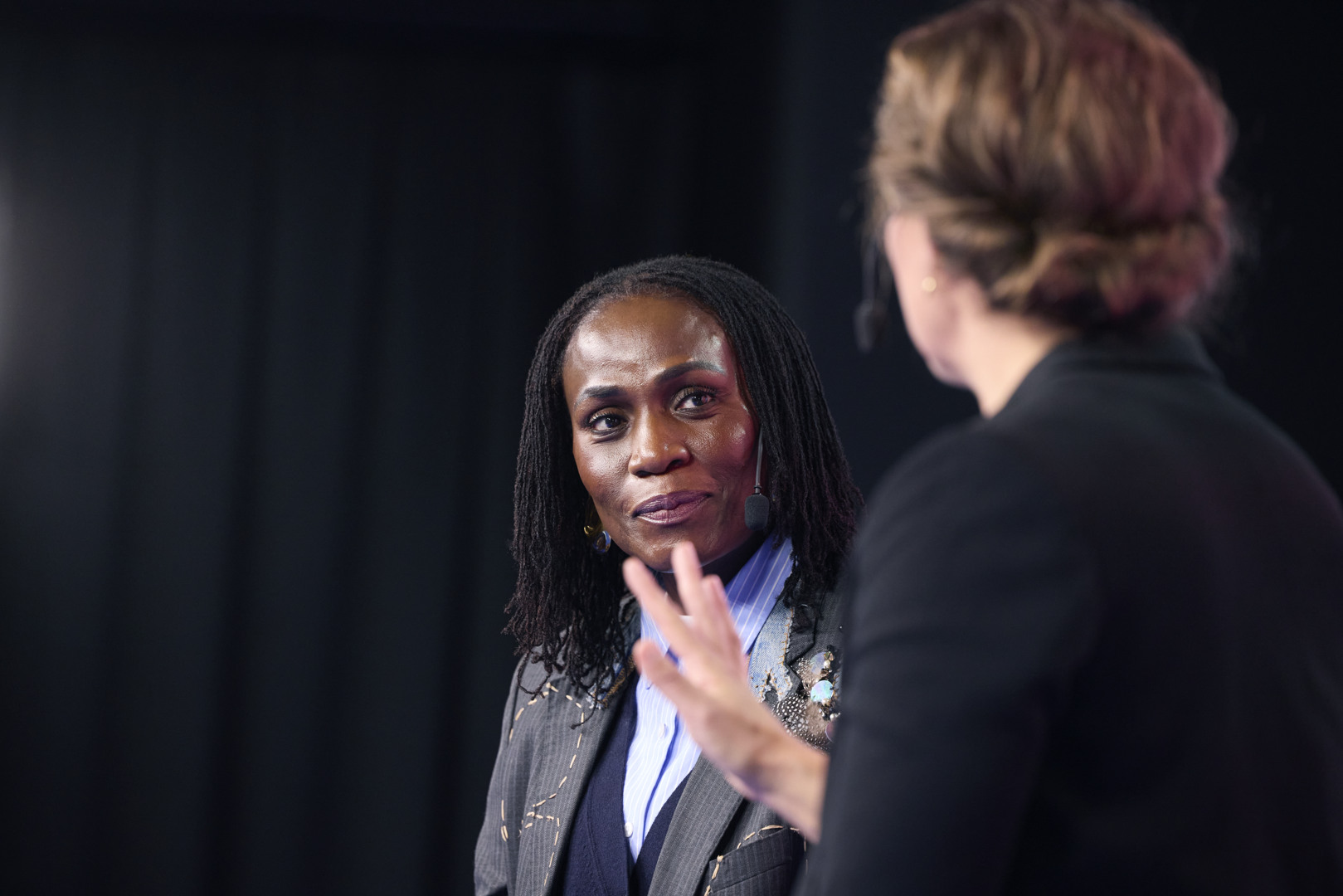
Srikrishna Murthy on stage at the GCA Summit 2026.
- This article is based on Srikrishna Murthy’s keynote speech held at the GCA Summit 2026.
Collaboration has become the impact sector’s holy grail. Everyone seems to agree that more collaboration is the answer. But here’s something that might be surprising: I think most of us should stop. At least until we fix what keeps breaking it.
In my experience of building partnerships across business, government, civil society and philanthropy in India, I have seen many ambitious collaborations break, and rarely for technical reasons. What gets in the way is often egos, politics, and organisations that are not ready. The textile industry is no exception, and I believe there’s a lot we can learn from understanding where collaboration tends to go wrong.
The challenges usually show up in three recurring areas.
Why it breaks #1: We misunderstand the terrain
Many collaborations break down because we misjudge what kind of problem we’re in.
For example, when Covid closed India’s schools in 2020, educational tech became the answer overnight. Why? Because it had worked in some schools. But those schools were small pilots. India has over 1.5 million public schools where many have no reliable electricity, and most of the children don’t own a device.
A pilot is like a garden: contained and easy to manage. A national problem is a jungle, and a jungle doesn’t follow a plan.
Understanding a problem takes time, and partners tend to see the wait as delay. Impatient, they reach for the easiest problem, and the first move is often wrong.
Why it breaks #2: Handshakes happen at the top
Many partnerships struggle with the distance between the top and everyone else. In a current collaboration I’m working on, three universities are trying to tackle women’s entrepreneurship. At leadership level there is warmth and full agreement on why they’re working together.
But the leaders are not the ones doing the work. Further down in the organisations, there’s friction because the people who are doing the work have never been told why the partnership exists. Without a shared purpose, they fall back on defending their own institution. Soon the discussion is no longer about women’s entrepreneurship, but about which university is better ranked and who should therefore listen to whom.
This is an example of when the “why” is settled at the top and not passed down. This happens when the people that the work is meant to serve are not in the room to begin with.
Why it breaks #3: Coordination is rarely funded
The work that keeps a collaboration going is the work that rarely gets funded. Someone has to take the notes, chase the follow-ups and set up the next call. In India, industry and government came together in an initiative called Making India Play, which set out to get 300 million children playing for an hour a day. After two years the project still hadn’t taken off. No one would pay for the coordination.
Another example. Recently, the launch of a research collaborative took a different approach: the main funder committed on day one to fund the coordination for three to five years, and within 18 months it had seen significant success. Effective collaborations need someone whose job is to hold them together, whether a foundation, a consultancy, a large nonprofit or one determined individual. This makes a huge difference in terms of ensuring how successful collaboration can happen.
The S-shaped road to collaboration that thrives
The encouraging part is that these breaks can be fixed by redesigning how we collaborate. Collaboration follows an S-curve: progress is slow while partners learn the terrain, then it speeds up once that groundwork is done.
For your next collaboration, a few things are worth doing differently:
• Invest in the time it takes to understand the terrain. Demanding speed on day one risks solving the wrong problem.
• Involve every level in shaping the collaboration, not only leadership but also the teams who’ll carry it out and the people
it’s meant to serve.
• Fund the coordination and give someone the job of
holding it together.
• Share the result, good or bad. In a collaboration, the outcome belongs to everyone who took part.
Do that, and collaboration can deliver. Skip it, and please don’t collaborate at all.
The views expressed in this piece are the author’s own. We’re proud to share them on our platform to help spark meaningful industry conversation.
Press contact

Head of Communications
In brief
Srikrishna Murthy (Krishna) is the Co-founder and CEO of Sattva Consulting, one of India’s leading impact consulting firms. He is known for championing, Denominator Thinking in India’s social impact landscape. This approach focuses on driving systemic change at scale by fostering collaboration and innovation at the intersection of businesses, civil society, governments, and the broader impact ecosystem.
With over 15 years of experience in social impact, Krishna has served as an advisor to prominent national and international corporations, non-profits, foundations, and government agencies.