Textile Futures 2040: four possible futures for the textile industry
Together with Forum for the Future, we are launching Textile Futures 2040, four scenarios that help industry leaders test today’s decisions against different possible futures. An open toolkit lets any organisation run its own session.
- Textile Futures 2040 was developed by Forum for the Future with funding from H&M Foundation.
- H&M Foundation donated SEK 2.25 million. The project runs from April to November 2026.
- Scenarios are not predictions. They are designed to challenge familiar thinking and prompt questions about which assumptions still hold, which signals to watch and which choices make sense across more than one possible future.
Nobody knows what the textile industry will look like in 2040. But decisions made today will help shape it.
Textile Futures 2040 is a set of four scenarios for the industry in 2040. It was developed by Forum for the Future with funding from H&M Foundation, and it is built to help organisations make better-informed decisions on the path to net zero and a just transition.
Why look ahead to 2040
The textile industry employs around one in eight workers worldwide, and organisations across its value chain are increasingly committing to climate action. 88 percent of the brands reporting to Textile Exchange now have formal targets.
That transition, for climate, nature and the people across the value chain, will happen in a changing world. New technologies and business models are emerging, while economic conditions, geopolitics, regulation and social expectations shift.
This is where foresight can help. Exploring several plausible futures, rather than planning for one, lets organisations challenge their assumptions and spot risks and opportunities early. Textile Futures 2040 builds on Forum for the Future’s earlier fashion scenarios, beginning with Fashion Futures 2030 in 2010.
These scenarios test some of the industry’s most common assumptions, from continued growth to technology resolving the hardest problems. Exploring futures like these shows how the same decision can lead to very different outcomes and helps organisations shape the future they want. They also point to the value of a just and regenerative transition, one that plans for livelihoods and nature alongside emissions and is built into decisions on materials, sourcing and investment from the outset.
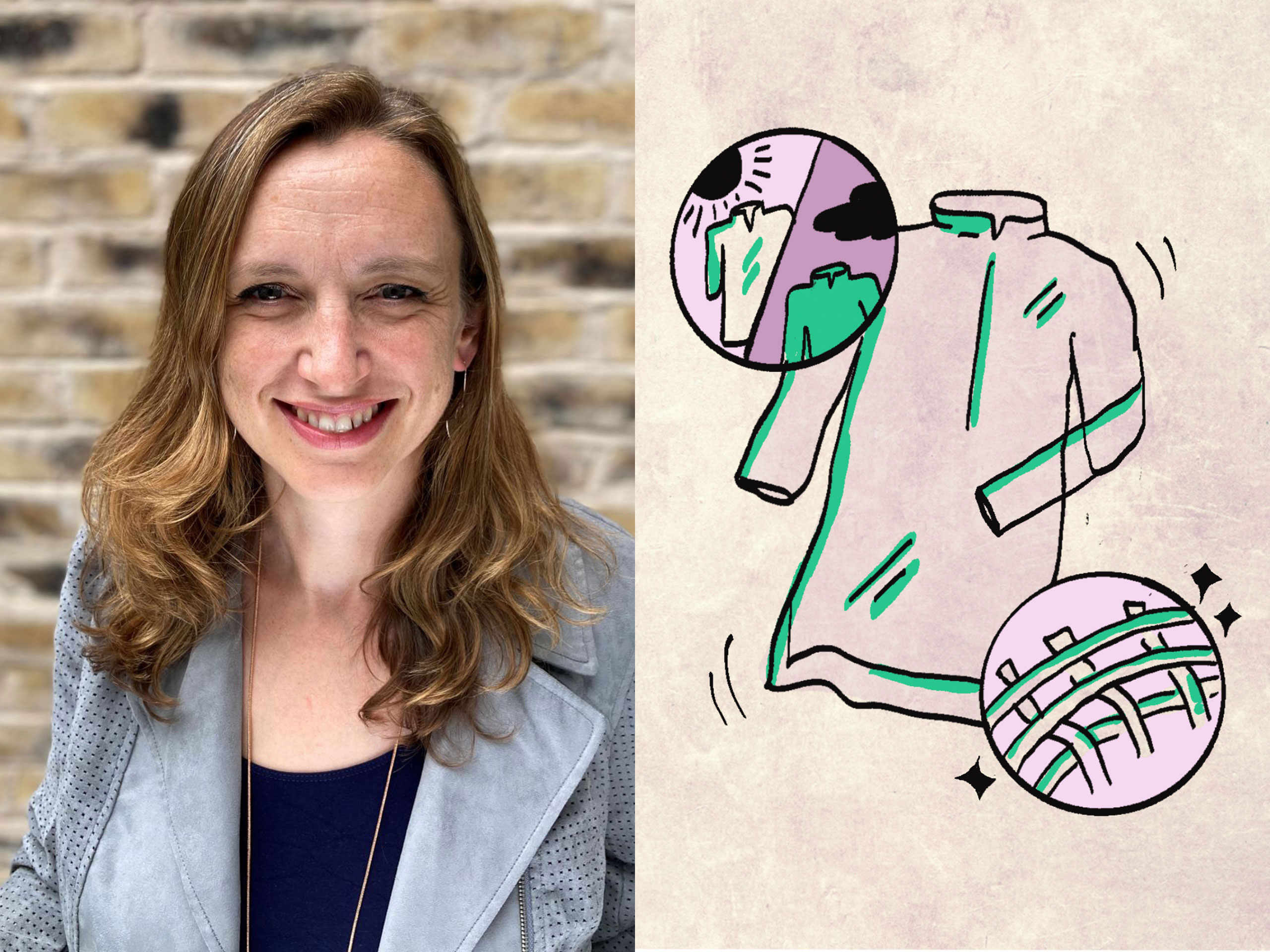
Zoe Le Grand, Managing Director, UK and Europe, Forum for the Future
Four scenarios, four worlds
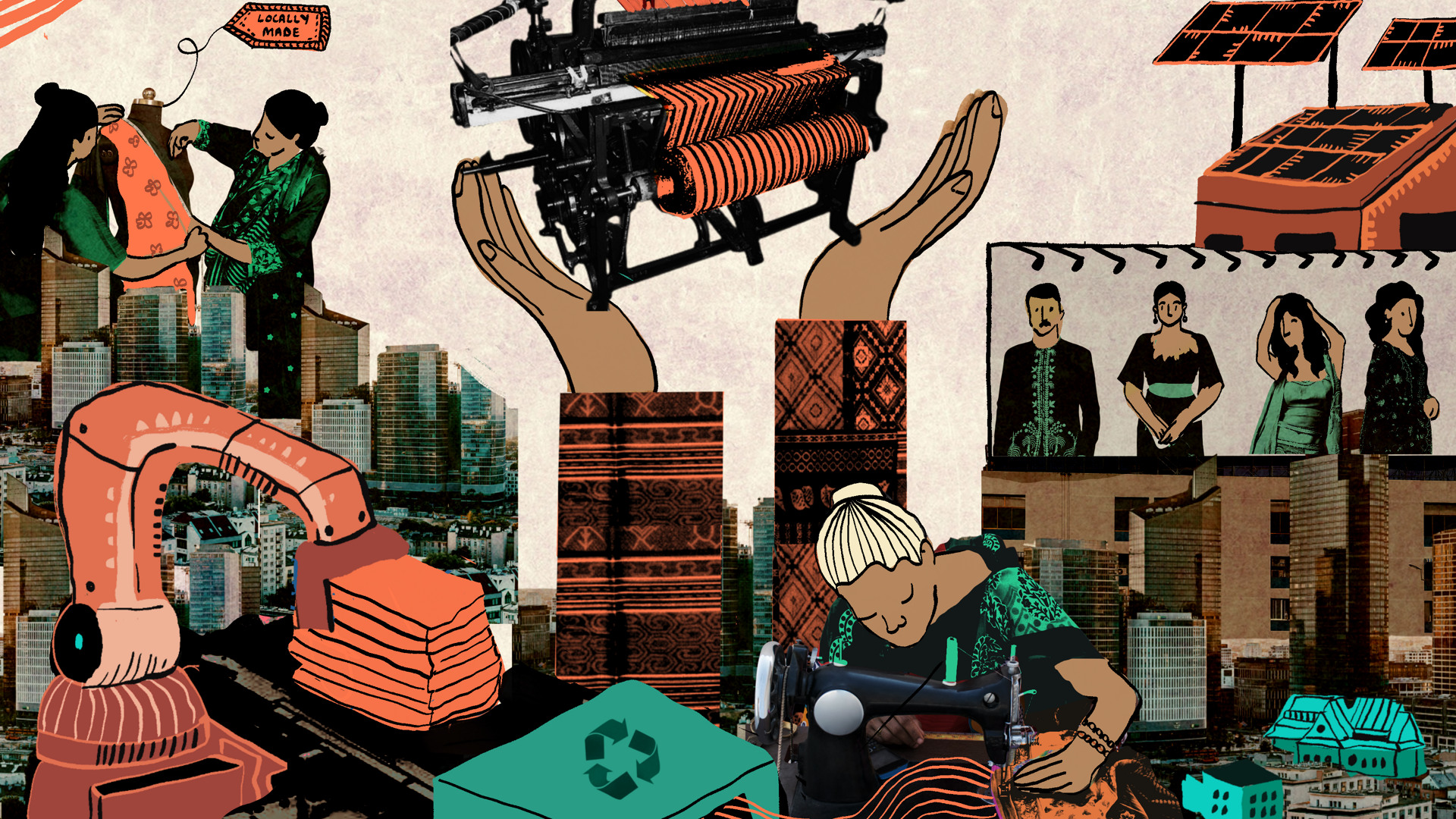
The scenarios are not predictions. They are deliberately different stories of what could happen, grounded in trends and signals already visible today. They challenge common assumptions about growth, technology, consumption and responsibility, and they differ in how supply chains work, from deeply interconnected to hyperlocal.
Each scenario comes with a day in the life of someone living in it, and a textile artefact from that future, drawn from speculative design to make each world tangible.
- New Age Corporate Empire: Corporations become more powerful than governments, manufacturers gain influence and technology delivers efficiency. Inequality grows and decarbonisation remains secondary to profit. Everyday clothing becomes durable and climate-adaptive, while style moves into digital layers. Explore the scenario, meet Quality Checker Kavitha and discover the artefact: The only kurta you need.
- Power Shift: The centre of economic and cultural gravity moves towards Asia, where state-backed innovation, stronger labour conditions and booming consumption reshape the industry. Handmade craft gains value, and shoppers can trace who made each garment. Explore the scenario, meet Brand General Manager Rajan and discover the artefact: The Loom card.
- Global Storms, Local Shields: Global supply chains break under climate and resource pressures, making local production, repair and reuse essential to increasingly self-sufficient communities. The circular economy becomes the biggest source of growth, and repairers are highly sought after. Explore the scenario, meet tailor Akosua and discover the artefact: The aboms.
- The New Noosphere: AI helps drive rapid decarbonisation and restore nature, but algorithms increasingly decide what gets produced, how resources are used and how people live. Recycled fibres become the main input, and some clothes can be planted. Explore the scenario, meet gardener Leonel and discover the artefact: The Enterremos Nuestra Ropa.
Built with the industry
The scenarios draw on expert interviews, focus groups and scenario-testing workshops with more than 60 stakeholders. They included global and local brands, manufacturers, unions and labour rights advocates, futurists, designers, foundations, academics and students.
A participant in one of the scenario workshops put it this way:
Terrific and thought-provoking. Most industries (ours included) are woefully under-prepared.
Use the scenarios in your own organisation
An openly available toolkit of workshop materials lets organisations run their own sessions. Teams can test their current strategies, investments and decisions against each scenario, and look for choices that hold up in any future.
We encourage organisations across the textile value chain to use it.
None of us knows what the textile industry will look like in 2040, but decisions made today will help shape it. We supported Textile Futures 2040 to help industry actors challenge assumptions and make better-informed choices on the path to net zero.
Anna Gedda, CEO, H&M Foundation
Explore Textile Futures 2040
- Read the full scenarios textilefutures2040.com
- Download the scenarios (pdf)
- Download toolkit textilefutures2040.com/downloads
Press contact
Head of Communications
About Forum for the Future
Forum for the Future is a leading international sustainability organisation. For 30 years it has convened change-making collaborations with business, governments, philanthropy and civil society to accelerate the shift towards a just and regenerative future in which both people and the planet thrive.