Last month we attended Bharat Tex, India’s largest global textile industry event in New Delhi. What left the strongest impression was not a debate about why change is needed, but a collective focus on how we make it happen. The conversation has clearly matured, moving beyond ambition and toward practical implementation, collaboration and systems change.
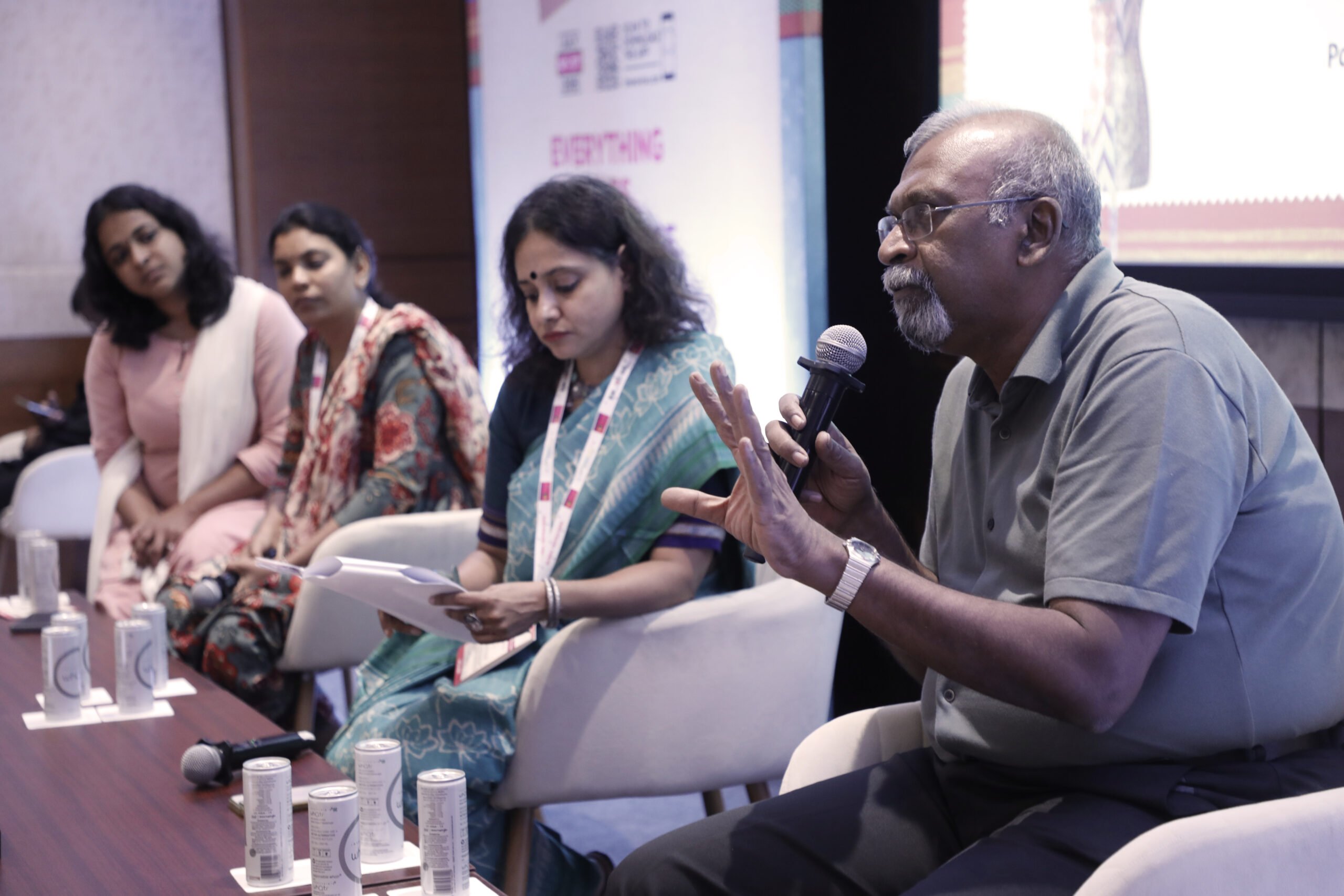
Chinmayi Naik from Hasiru Dala, Anitha from Meghana Enterprises, Aarti Mohan from Sattva and Shekar Prabhakar from Hasiru Dala Innovations.
For us at H&M Foundation, Bharat Tex offered an opportunity to share what we have learned through our project Saamuhika Shakti and the Cluster Collective Programme, while also learning from others across the ecosystem. It strengthened a conviction at the heart of our work: circularity is stronger when it is inclusive, and lasting transformation happens when communities, businesses, policymakers, investors and innovators work toward a shared goal.
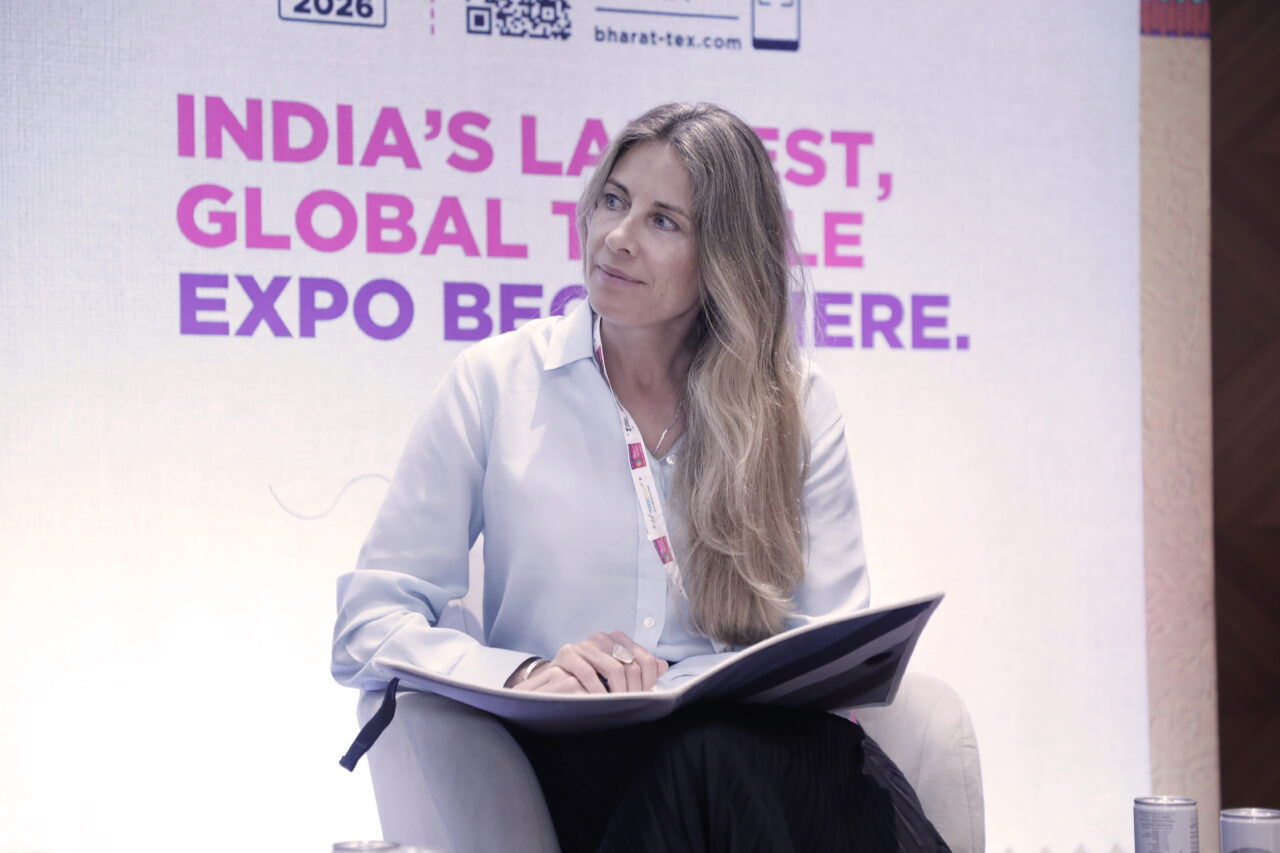
During the panel Inclusive Circularity in Action: How to Design for Responsible and Resilient Sourcing, the discussion brought together community, enterprise and philanthropic perspectives to show that responsible sourcing starts at the first mile. Through the lens of Saamuhika Shakti, Maria Bystedt, Programme Director at H&M Foundation, shared how inclusion and circularity are not separate agendas but mutually reinforcing foundations for stronger, more resilient value chains.
Maria Bystedt, Programme Director H&M Foundation.
The panel showcased tangible results from six years of systems-change work, including improved access to social security and skilling for waste-picker communities, the integration of responsibly sourced recycled plastic into H&M Group’s button supply chain in India, and the development of Textile Recovery Facilities connecting upskilled waste entrepreneurs with formal recycling markets. Together, these examples demonstrated that inclusive circularity creates social value while also strengthening traceability, predictability and business resilience.
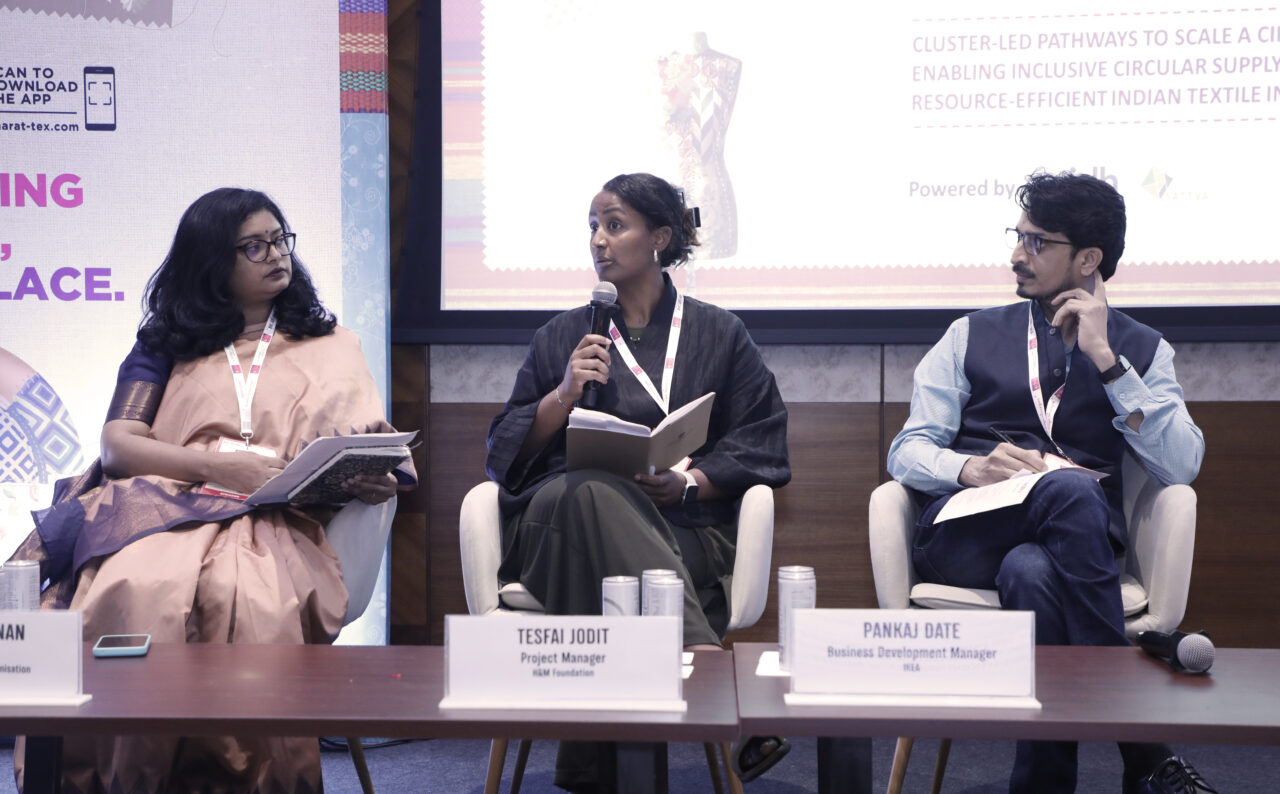
The panel Cluster-led Pathways to Scale a Circular Economy focused on the Cluster Collective Programme, a flagship project under the Re-START Alliance. Since joining the programme a few months ago, H&M Foundation has supported the establishment of a new cluster in Panipat, India.Jodit Tesfai, Project Manager, highlighted how cluster-based models can strengthen coordination, traceability, market development, technology adoption and inclusion. Our experience has strengthened our conviction that circular transformation requires this kind of ecosystem approach: no single organisation can build a circular value chain alone.
Anjali Krishnan, IDH, Jodit Tesfai, H&M Foundation and Pankaj Date, IKEA.
Curiosity and collaboration
Based on our experiences from the conference, one theme stood out repeatedly. The question is no longer whether the textile sector needs to become more circular, collaborative and climate resilient. Instead, the focus has shifted to implementation. Conversations consistently explored how to align incentives, reduce risk, strengthen market demand and create commercially viable pathways for adoption.
Perhaps most encouraging was the sense that industry conversations are moving away from individual organisational ambitions toward collective implementation, asking not “What can my organisation do?” but “How do we create systems that allow all actors to succeed together?”
How do we create systems that allow all actors to succeed together?
A related shift was how sustainability itself was being framed. Climate action was discussed less as a standalone sustainability agenda and more as a question of resilience: how businesses can secure raw materials, how workers can continue to work safely and productively in a changing climate, and how supply chains can withstand increasing disruption.
What made many of the conversations valuable was that they didn’t hide the trade-offs. More traceability requires more data. More accountability can mean more reporting. New technologies need investment, but manufacturers operate on tight margins. Formalisation can open opportunities, but it can also exclude the people already making circular systems work. Systems change means holding these tensions rather than looking for a single solution.These conversations were powerful reminders that environmental, social and commercial outcomes are deeply connected when we look at the system as a whole.
Who gets to shape the transition?
If circular systems are being redesigned, who gets to participate in that redesign? This question matters because formalisation can unintentionally exclude the people whose knowledge and labour make existing systems function. First-mile actors should therefore not only benefit from the transition; their experience should help shape it.
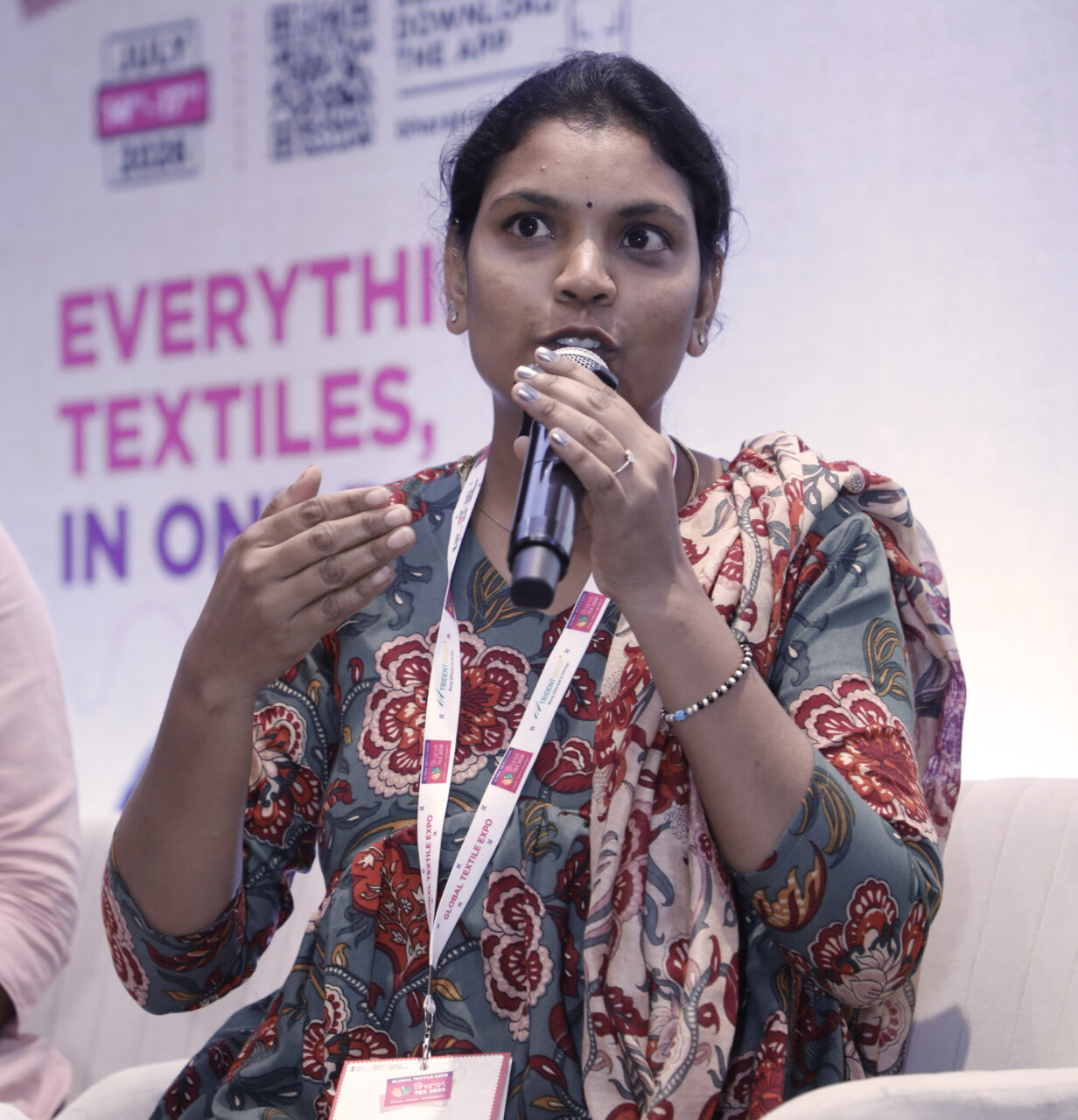
We had the opportunity to support some individuals to attend and contribute directly to the conversations. One of them was Anitha, a former waste picker but now a textile recovery entrepreneur who’s running Meghana Enterprises. She brought powerful first-hand experience of the waste-picker entrepreneurship journey emerging through Saamuhika Shakti. Her story illustrated how training, market connections and community leadership can transform textile waste into livelihoods and enterprise opportunities.
Anitha, Meghana Enterprises.
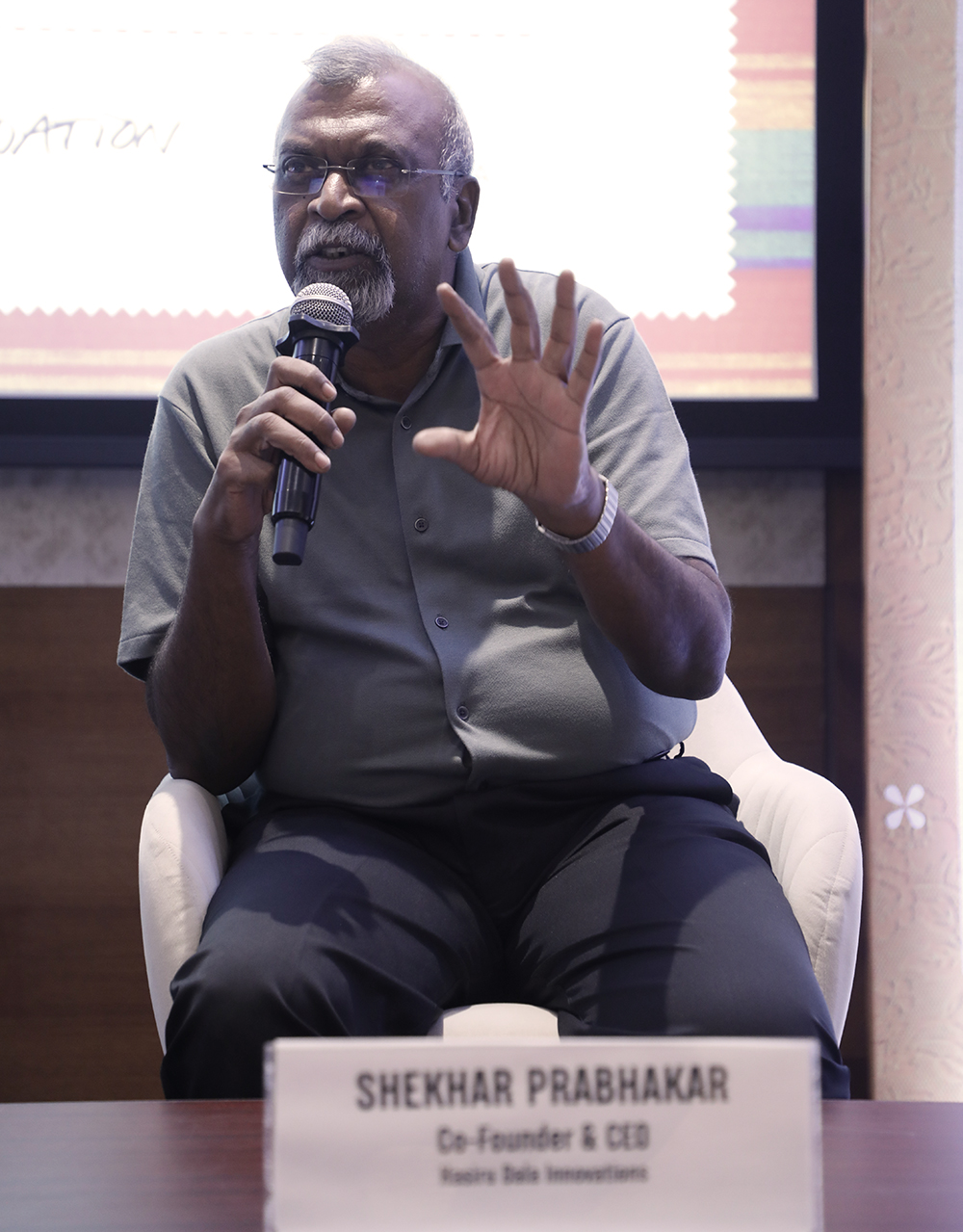
Shekar Prabhakar from Hasiru Dala Innovations joined us to articulate the business and systems case for inclusive circularity, demonstrating how responsible sourcing can strengthen supply chains while creating positive social returns.
Shekar Prabhakar, Hasiru Dala Innovations.
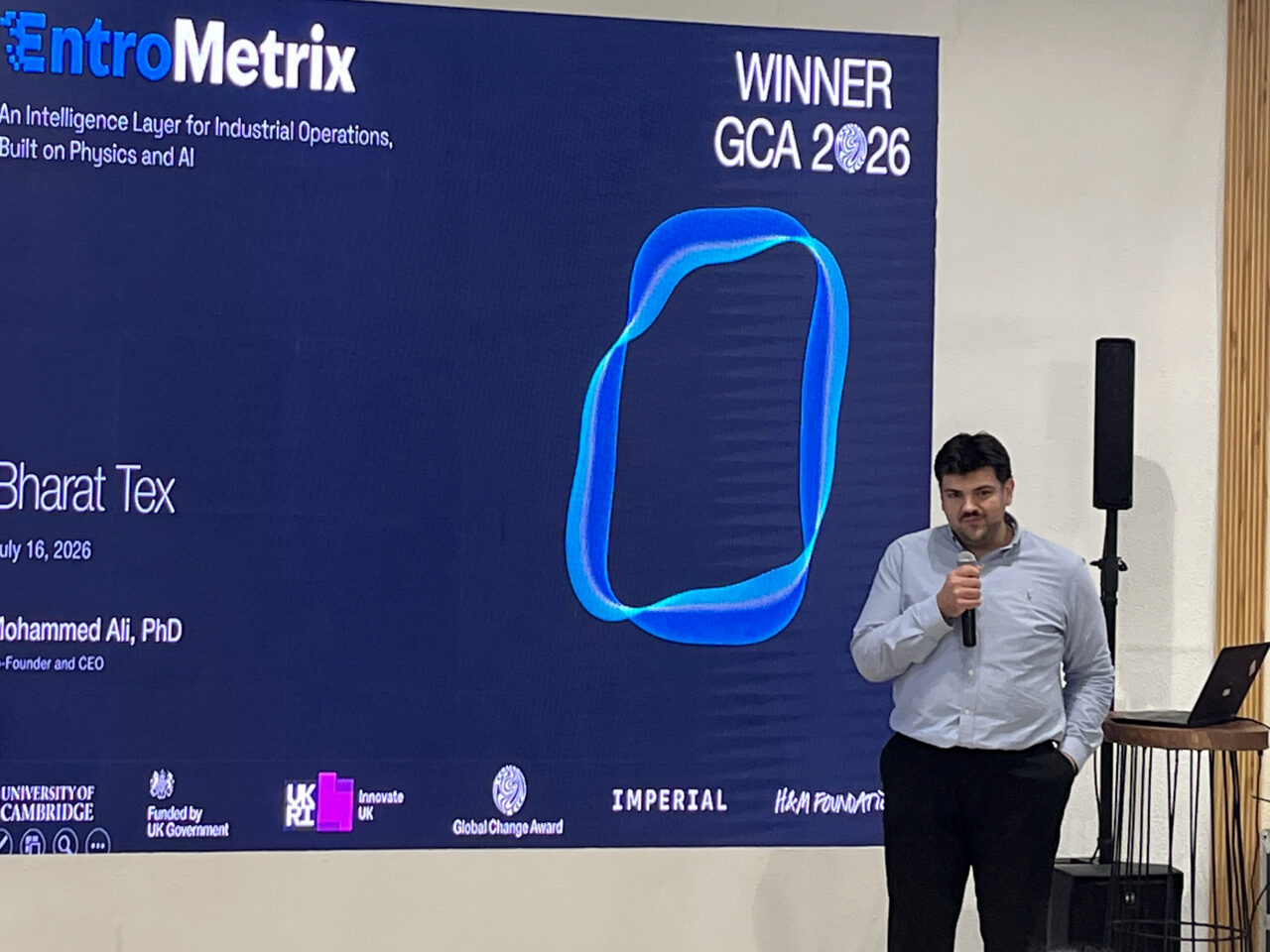
We also welcomed Mohammed Ali from EntroMetrix, one of our fresh Global Change Award winners, to attend the Innovation Pitch Forum, arranged by, PDS Ventures and Fashion for Good. His participation added the innovator perspective from the circularity ecosystem, broadening representation and reinforcing our commitment to ensuring diverse voices are heard in industry conversations.
Mohammed Ali, EntroMetrix.
Finance conversations also raised questions. Some first-mile entrepreneurs have years of experience, customers and predictable transactions, yet remain invisible to conventional lending because they lack the documentation or collateral the financial system expects. It made us reflect on whether inclusion sometimes requires changing the system that recognises value, not simply helping people fit into the system that already exists.
What this means for our role
One discussion also challenged us to think about the role philanthropy can play in this next phase. If the challenge is increasingly about adoption, not just innovation, funding another isolated pilot may not always be enough. Philanthropy can potentially play a different role: taking early risk, helping showcase and validate solutions, convening actors in pre-competitive spaces and helping build the enabling conditions that allow others to invest and scale.
This resonated with us. Through initiatives such as Saamuhika Shakti and the Cluster Collective Programme, we are increasingly interested in what happens when we look beyond individual interventions and instead consider the conditions around them: the partnerships, infrastructure, markets, financing and participation needed for solutions to take root and grow. We don’t have all the answers, but Bharat Tex reinforced our conviction that this is where philanthropy can play an important catalytic role.
We don’t have all the answers, but Bharat Tex reinforced our conviction that this is where philanthropy can play an important catalytic role.
We left Bharat Tex optimistic, but also with a harder question. If many of the technologies, ambitions and actors are already there, what exactly is preventing the system from moving? Increasingly, the answer seems to sit between the individual solutions: in the incentives, relationships, infrastructure, financing and trust that connect them. Perhaps the next phase of transformation is therefore not only about finding better solutions. It is about building systems reliable and inclusive enough for those solutions to take root, connect and scale.
For us, that is what moving from shared vision to shared action increasingly looks like.
Bharat Tex is India’s largest global textile industry, serving as a platform for the entire textile value chain. It connects manufacturers, exporters, and importers to showcase innovations, share insights, and explore business opportunities.
A project between the Spanish hydroponic-farming company Magtech and H&M Group’s Circular Innovation Lab is testing a different way to grow cotton: without soil and in a closed loop of water. Grown this way, one of the world’s thirstiest and most chemically demanding crops could…
With more than one million garments already produced using dissolvable thread, Resortecs is showing what design for disassembly can look like in practice. The company’s technology addresses one of textile recycling’s most persistent barriers: garments are still rarely designed to come apart. What started as…
Raising capital is often described as a numbers game. For textile innovators, it can mean speaking to more than 100 investors before finding the right partner. We asked three former GCA winners how they secured their first investment, what surprised them most, and what they…