GCA Impact story: How Resortecs is scaling textile recycling
With more than one million garments already produced using dissolvable thread, Resortecs is showing what design for disassembly can look like in practice. The company’s technology addresses one of textile recycling’s most persistent barriers: garments are still rarely designed to come apart. What started as an experiment a decade ago is now moving into global supply chains, pointing to a more scalable path for textile-to-textile recycling.
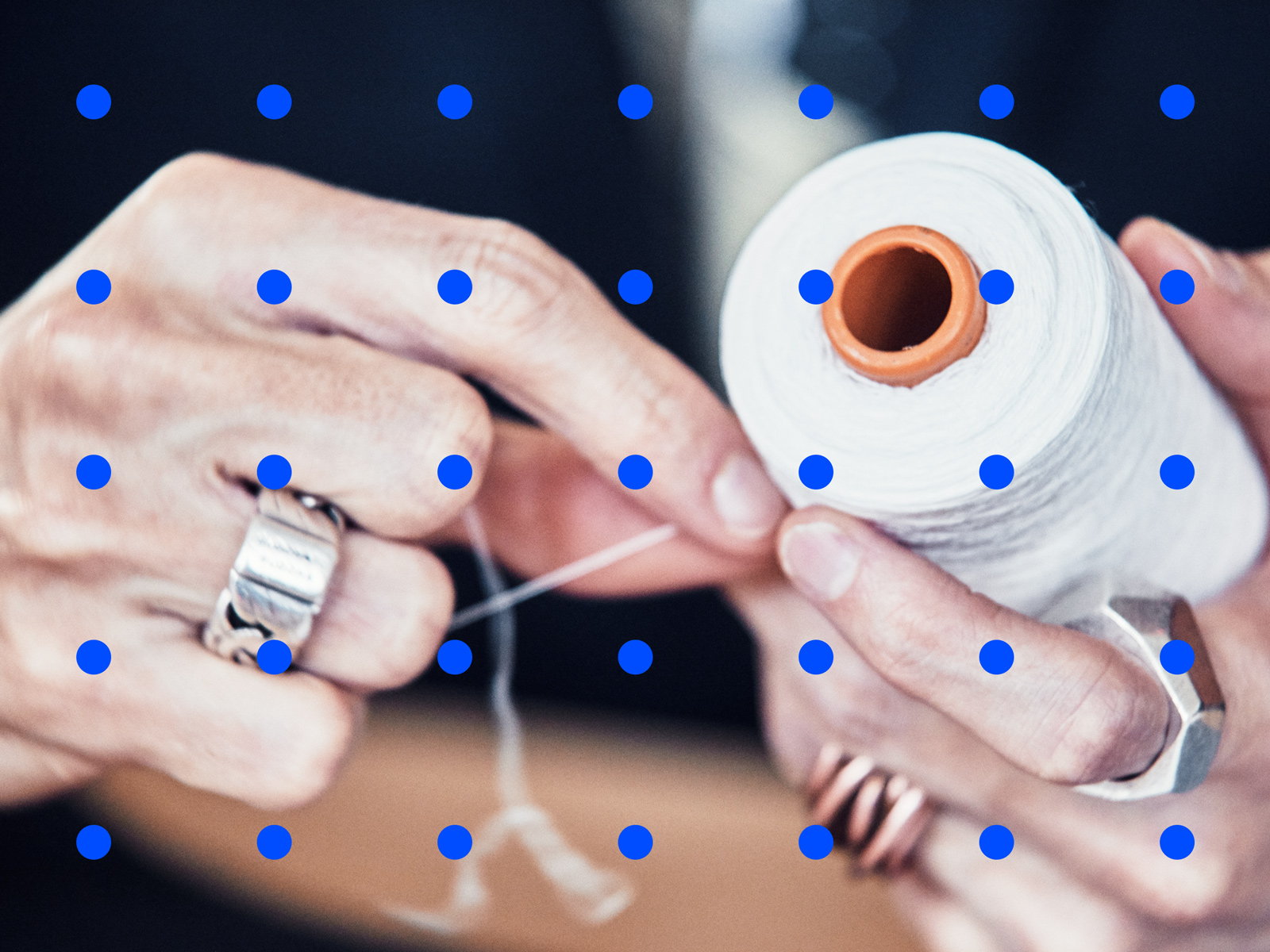
“If it’s not dismantlable, it’s not recyclable,” says Cédric Vanhoeck, founder of Resortecs.
For him, the problem is not just how textiles are recycled, but how garments are designed in the first place. Over the past decade, he has been working to change that, turning an early experiment with a heat gun from a local DIY store and dissolvable stitching into a system that is now moving towards industrial scale.
From engineering to fashion – and back again
In 2017, Cédric founded Resortecs together with Vanessa Counaert, with the ambition of solving one of fashion’s biggest barriers to circularity. The idea grew out of his studies in Industrial Design Engineering at Delft University of Technology in the Netherlands, where he was first introduced to circular thinking.

“I guess you could say that my professor brainwashed me,” he laughs. “Since then, circularity has been a common thread in my life.”
He began to see the scale of the industry’s waste problem and how little textile material is recycled into new garments. That realisation became the foundation of Resortecs.
In the early days, progress was far from smooth. Cédric and Vanessa were experimenting with threads, but they dissolved at the wrong temperatures, garments failed during testing, and funding was uncertain.
Many of our friends questioned us.
Cédric Vanhoeck
They thought we were ko-ko.
Winning the Global Change Award in 2018 became a turning point. The funding and embarking on the Changemaker Programme allowed the team to continue development. But just as importantly, it brought credibility.
“People around us thought that if H&M Foundation believes in what Resortecs is doing, then they must be onto something.”
Designing disassembly into the system
With growing support, Resortecs expanded its solution beyond thread. Smart Disassembly™ was developed as a thermal system to automate the dismantling process at scale.
Together, these innovations reflect a shift in thinking. Instead of focusing only on how garments are recycled at end-of-life, Resortecs builds disassembly into the product from the start.
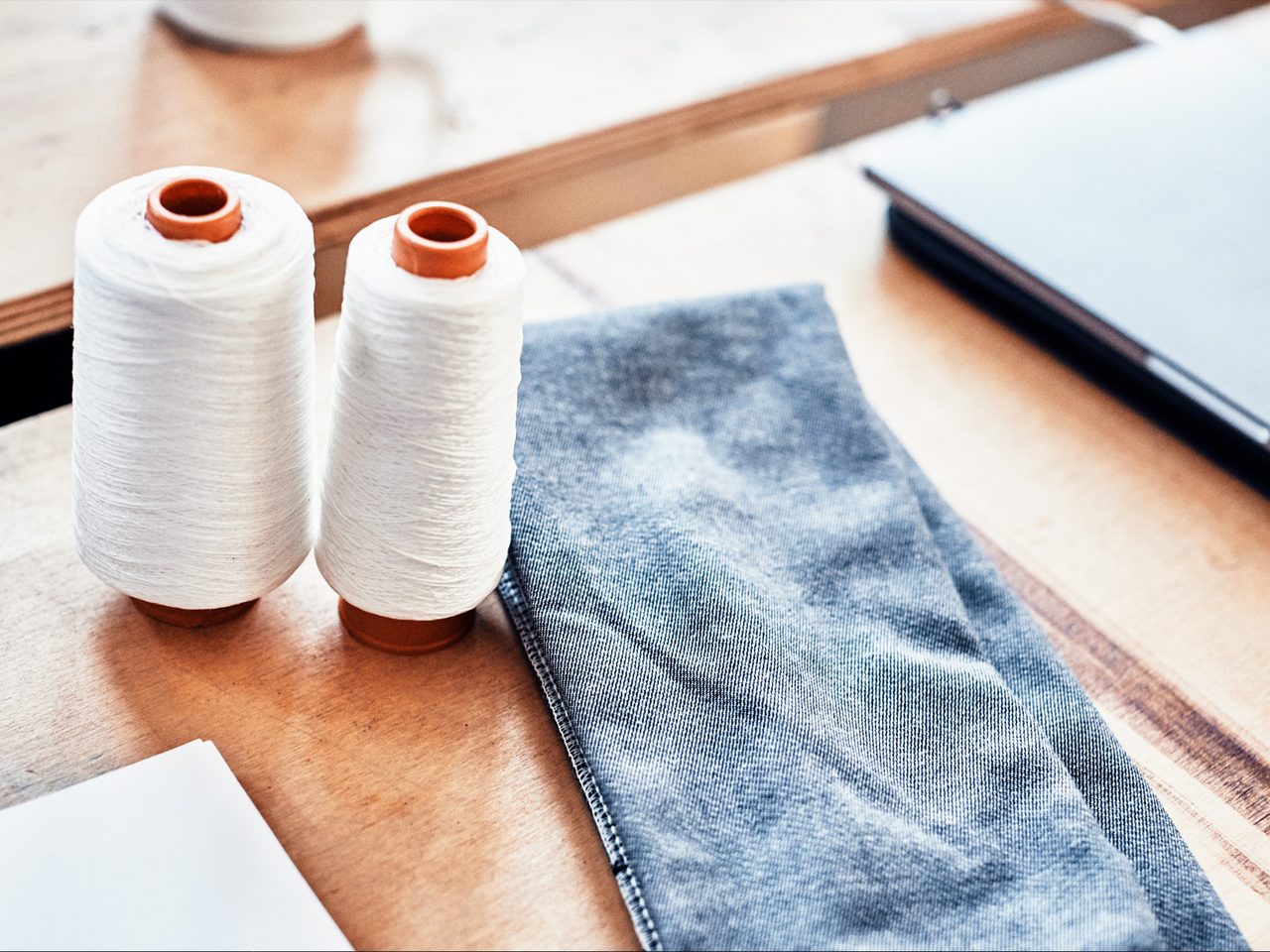
Using heat-sensitive threads and components, garments can be taken apart in a controlled process at the end of their life. When exposed to specific temperatures, the stitching dissolves, allowing different materials to be separated quickly and without damage.
This makes it possible to recover a much higher share of usable material, turning complex, multi-material garments from waste into valuable resources.
“Recycling is key to decarbonising the textile industry, but only if it’s paired with the right way of taking products apart,” Cédric says. “When you move from linear to circular systems, you’re not just reducing impact. You’re unlocking value.”
Turning pilots into proof
Over the years, Resortecs has worked with brands including Bershka, Decathlon, Sioen and Peak Performance, testing the technology across a wide range of products.
For Peak Performance, the collaboration focused on one of the industry’s more complex product categories: insulated outerwear.
“Working with outdoor garments combining stretch and woven fabrics as well as quilted constructions, we recognised the potential of design for disassembly,” says Aspar Karahyuseinov, R&D Product Specialist at Peak Performance.
Using Smart Stitch™ and Smart Disassembly™, the team was able to separate components that are typically difficult to recover, including down insulation and nylon fabrics.

Beyond improving material recovery, the solution also supports a broader shift toward products designed with circularity in mind.
“It strengthens the textile-to-textile recycling value chain and unlocks new possibilities for complex garments, especially as circularity requirements continue to evolve across the industry,” says Aspar.
These types of pilots are helping demonstrate how design for disassembly can work in practice, while gradually building confidence across the industry.
“The shift is subtle, yet it has a significant impact on how materials are treated,” says Aspar. “In many ways, it reminds the industry how powerful a thread can be.”
Building industry momentum
To this day, more than one million garments have been produced using Resortecs technology, with deployments in over 60 countries. And now, Resortecs is entering a new phase.
In 2025, the company raised €6 million in Series A funding to support the development of its first industrial disassembly line. The planned facility is expected to process 3,000 tonnes per year. The ambition is to deploy multiple disassembly hubs across Europe within the next five years.

Resortecs has also started building relationships deeper within the manufacturing ecosystem. One example is its partnership with AMANN Group, one of the world’s leading sewing thread manufacturers. For Goldwin Play Earth Fund, an investor in Resortecs, this represented an important commercial signal.
“When a traditional industrial player of that significance aligns with a startup’s solution, it speaks volumes,” says Shiyo Takeoka, CEO of Goldwin Venture Partners, the strategic investor arm at Goldwin Play Earth Fund, and continues:
“Dissolvable thread is, on one hand, genuinely inspiring for designers, opening up creative possibilities that didn’t exist before. But it also captures the commercial attention of industrial players, and that combination is rare. When you see both sides of the value chain responding with genuine interest, that tells you something notable is happening.”
Shifting the system
Despite the technological progress, Cédric says the next phase is less about invention and more about industry alignment.
“We need the industry to walk the talk,” he says. “Everyone is talking about circularity, but we are still at one percent. That is not moving fast enough.”
Scaling design-for-disassembly requires coordination across brands, manufacturers, recyclers and policymakers. For investors and strategic partners, this is what makes the opportunity both challenging and significant.
We need the industry to walk the talk. Everyone is talking about circularity, but we are still at one percent. That is not moving fast enough.
Cédric Vanhoeck
“No single startup can succeed in this space alone,” says Shiyo Takeoka at Goldwin Play Earth Fund. “What matters is ecosystem formation, bringing together brands, manufacturers and technology providers around a shared system.”
For Cédric, moving from product development to industry adoption has fundamentally changed how the company approaches growth.
“You start with technology. Then you realise you need brand commitment. Then policy,” he says. “That’s actually the hardest part, because a whole system needs to shift.”
The next phase: scaling
Still, momentum is building. Resortecs aims to become a standard for design-for-disassembly in the textile industry, helping transform garments from waste into valuable material streams.
The company’s next ambition is scale. Over the next five years, Resortecs aims to enable 60 million garments to be made and disassembled using its technology. If achieved, the impact could be substantial: more than 900,000 tonnes of CO₂ emissions avoided and up to 600 billion litres of water saved, while helping recover valuable materials currently lost as waste.
“For me, the goal is simple,” Cédric says. “We want garments to become resources instead of waste. Once that starts happening at scale, the whole industry will fundamentally change.”
About Resortecs
Resortecs develops technologies that enable garments to be designed for disassembly and efficiently processed at end-of-life.
Its solution combines Smart Stitch, a heat-dissolvable thread integrated into garment production, with Smart Disassembly, a thermal system that automates textile disassembly.
Together, these technologies enable higher material recovery, reduce reliance on manual processes and make textile-to-textile recycling more economically viable.
Press contact

Head of Communications
Resortecs in numbers
- 1 million garments produced using Resortecs technology
- €12 million raised since founding
- 15 employees across the company
- 60+ countries with deployments
- 15x faster than traditional disassembly methods